This post is from 2013. Content and links may no longer be up to date.
I walked across India barefoot on impossible roads; I lived in an ashram as though it had always been my home; I meditated, for hours, inside the Temple of Peace on Earth in the presence of the largest mercury Shiva Lingam in India, in the shade of mango trees, sitting before my master’s mandir; I met people from all over the world and shared everything with them for days and days; I found peace, inner peace, the real kind — and now I know what it tastes like.
In that patch of land immersed in the forest, in the company of monkeys and peacocks, where time seems to stretch and bend under the effect of distortion; where a superhuman harmony reigns, never known before; where everything flows as it must flow, where the energy is so powerful that at certain moments it hits you completely.
Never, not ever, on that 4th of September a year ago while talking with my friend Alessandro, could I have imagined that all of this would happen to me, that life would change me so profoundly, and that I would find myself now here speaking of India, of my master, and of that spiritual — and surreal — utterly unexpected journey.
India: that absurd country for which you will never be prepared enough. That country that welcomes you with its deafening colours, the scent of incense, the smell of burning plastic along the roadsides, the reek of piss, street food, the pungent smell of coriander, the orange flowers used as temple offerings, stray dogs, children running naked and barefoot beneath bridges under construction, women dressed in their magnificent saris, rickshaws that hurtle at you from every direction. And because of which you risk your life every other moment.
This post is from 2013. Content and links may no longer be up to date.
During our trip to Japan, among the smaller cities we visited near Kyoto, Nara is without doubt the one I loved most. Apparently small, it reveals itself in reality as a true gem.
You only need to step out of the station, cross the first large junction, and you immediately find yourself walking along a small street full of delightful shops that leads you straight to the marvellous Nara Park. The park is one of the unmissable sights of this city, and almost all the places of greatest interest are found within it — and to our great astonishment it is home to some 1,200 deer that freely roam and interact with people! Which is why Nara is also known as the city of deer :)
NaraThanks to a well-made map that a lady at the information centre kindly gave us, we managed to take a long walk through the park visiting the main temples and sites. One of Japan's great qualities — excellent, I would say — is that everything is always well organised. One could almost travel without a guidebook, given the large amount of information that is often readily available at every station.
This post is from 2013. Content and links may no longer be up to date.
Kyoto was without doubt one of the cities that has remained most deeply in my heart.
Known above all as the city of the geisha — where you can still encounter them walking along the streets of the Gion district — Kyoto is the city you absolutely must not miss if you are seeking the atmosphere of Japanese tradition.
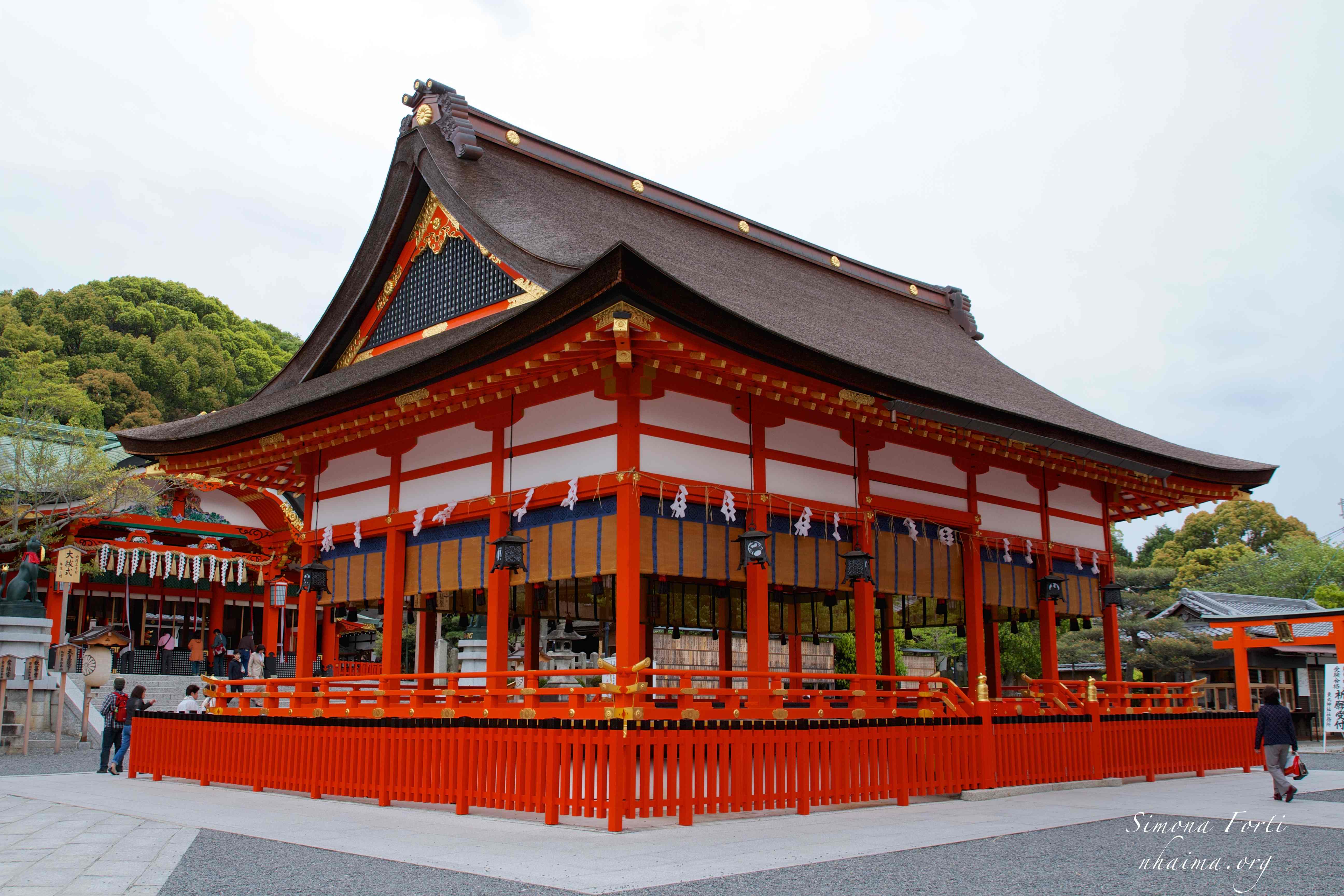
Shinto shrine at Fushimi Inari near KyotoAlthough Kyoto is itself a vast city, with its enormous shopping centres, the lights and colours typical of Japan, it has managed to maintain and preserve its more traditional side — the one that makes you feel a little as though you are inside a film, that evokes wonderful sensations, that truly lets you see and understand Japanese culture. There is an infinite amount to see in Kyoto, so I will limit myself to telling you about what I visited and what I think is worth seeing.
This post is from 2013. Content and links may no longer be up to date.
If there is one experience from my trip to Japan that has remained particularly close to my heart, it was without doubt the visit to the area of Koyasan and the overnight stay in one of the Buddhist temples.
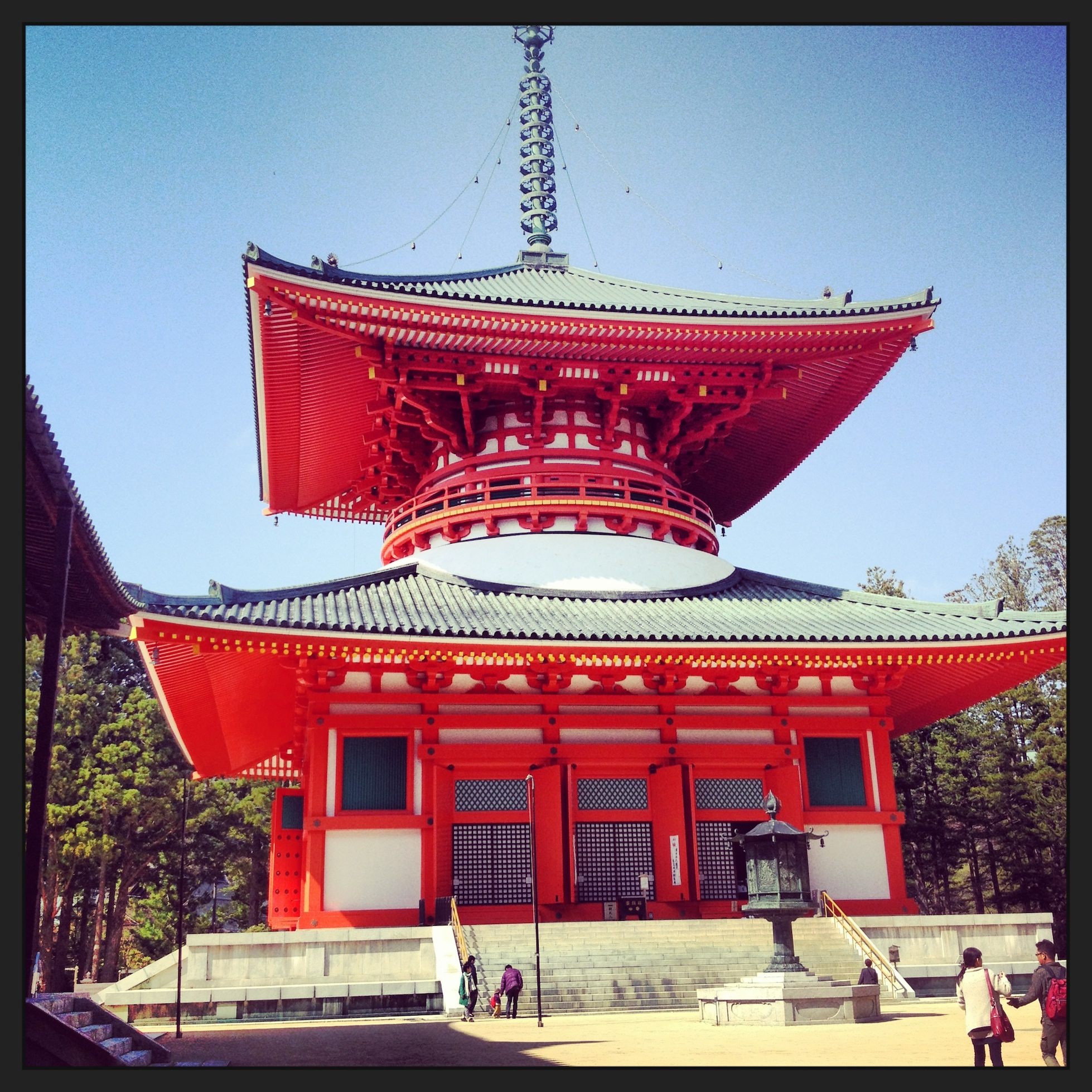
Konpon Daito Pagoda
The Koyasan area takes its name from Mount Koya and is situated on the Kii Peninsula, in Wakayama Prefecture, not far from Osaka. Mount Koya, considered one of the most sacred places in Japan, was founded 12 centuries ago by the monk Kukai, also known as Kōbō-Daishi, and over time became the main centre of Shingon esoteric Buddhism, one of the largest and longest-lived schools of Japanese Buddhism. Mount Koya stands at roughly 800 metres above sea level and the entire area is rich in Buddhist temples and ancient monastic complexes, nestled in the green of nature, which offer board and lodging to travellers.
This post is from 2013. Content and links may no longer be up to date.
Trying to talk about Tokyo and/or recommend some places to see in a single post is practically impossible. If I were to describe it in a few words I could say it is enormous, ever-changing, colourful and unexpected. As with all of Japan, Tokyo also changes quickly; you can pass from the incredible crowds of Shibuya to the almost provincial calm of Musashino — all within 20 minutes by metro.
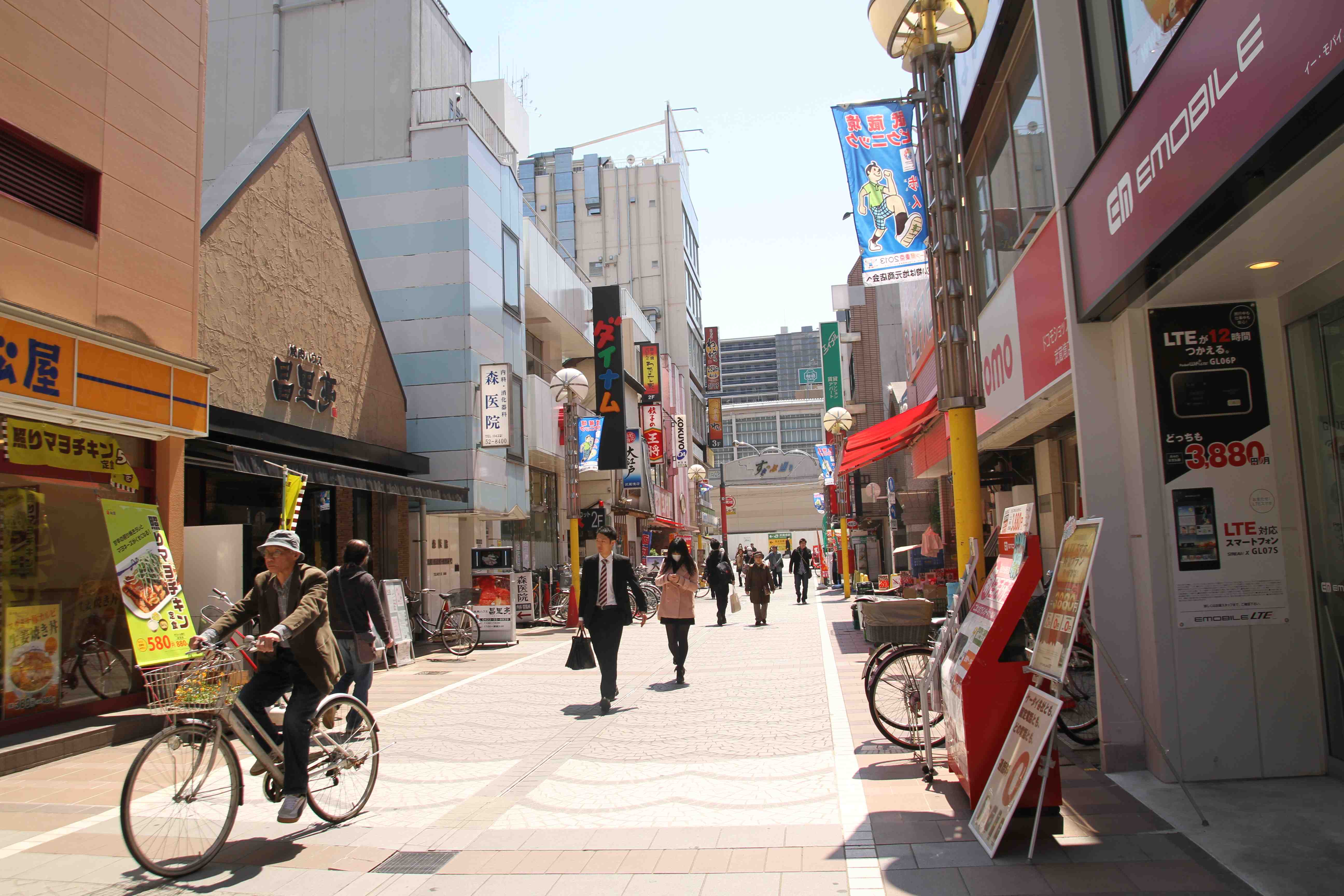
A street in MusashinoThe districts — or rather the prefectures — are numerous, some very different from one another, and deciding which of them to go and visit was a task at which we only partly succeeded. But despite frequently consulting the Lonely Planet during the trip — which is very well done and particularly useful — I essentially let myself be guided by "chance" and instinct. That is my way of travelling. However much I try to draw up a rough itinerary to follow, I invariably end up upending it. I love getting lost in the back streets of neighbourhoods, getting off the metro at random stops and visiting places I had never even heard of. After all, Japan is a country that lends itself beautifully to this — it has so much to offer that you would never want to go back to the hotel.
This post is from 2013. Content and links may no longer be up to date.
India: you either love it or you hate it. It knows no middle ground. It is the land of contrasts, a country that puts you to a stern test on several fronts but that also knows how to give you a great deal — everything that, for obvious reasons, our own country or culture could never provide. I loved it, and deeply so, and I suffered from the fact that on this trip I did not manage to see it as I would have wished. But in the end mine was only an au revoir and, having learned from what those 16 days taught me, I know I will go back better organised. As I was saying, India puts you to the test, starting with the heavily spiced and spicy food, with what you can see along the road as you walk through the cities — because poverty is considerable and very visible, especially in the outlying areas.
So what are the things we can do before and during our stay in India to enjoy it fully and serenely, without risking having it ruined by physical ailments or various discomforts?
Let us start with the hotel: as I had already said here before leaving, if you want a hotel that meets at least the minimum requirements of hygiene and decency, you must pay. Besides the classic Booking.com that everyone knows, what I would recommend is also having a look at Agoda.com, used predominantly for Asian destinations, where you often find hotels and deals that you would not find on other sites. If I may, spend a few extra hours of your time doing cross-checks on the hotels you have chosen. Look for reviews on TripAdvisor, Google reviews and other sites; and above all look carefully at the date of the most recent review. Do not trust those with reviews that are too old, otherwise you risk being caught out.
This post is from 2013. Content and links may no longer be up to date.
Japan is one of those places to visit at least once in a lifetime. It is a marvellous country, a country where you truly understand what respect means — respect for other human beings and for the land — where everything works perfectly, where people tend towards collaboration and cooperation rather than individualism. It is a country that can change very quickly, even simply by passing from one street to the next; from the delirium of lights, colours and sounds of a certain Tokyo neighbourhood to the more traditional and ancient atmosphere of Kyoto.
It is a country where people are not, in truth, cold or impenetrable as is often believed or said; they are simply terribly shy, extremely careful not to disturb others — especially foreigners — and deeply honest.
And it is not even true that it is such an expensive or unapproachable country as one might think. With the right precautions you can do a trip to Japan of 10 or 14 days without spending a fortune.
This post is from 2013. Content and links may no longer be up to date.
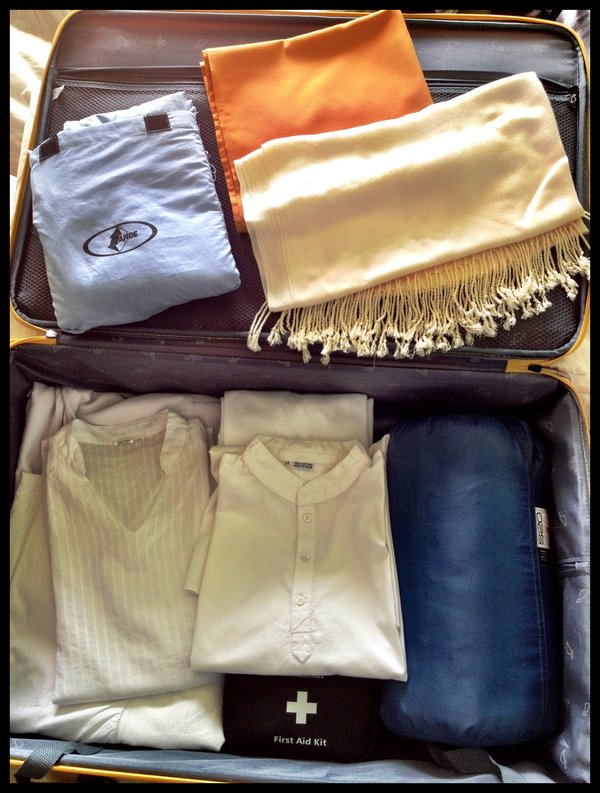
When I left for India in March I had a vague idea of what to pack; but now with the benefit of hindsight I feel I can give this advice to anyone who intends to travel to India and/or an ashram, as I did.
The list of things to bring was not actually that long, but they were all fairly important items. As I mentioned previously, India is a country where it is generally warm at any time of year — at least during the day. So you should favour light, comfortable clothing, preferably cotton or linen in light colours.
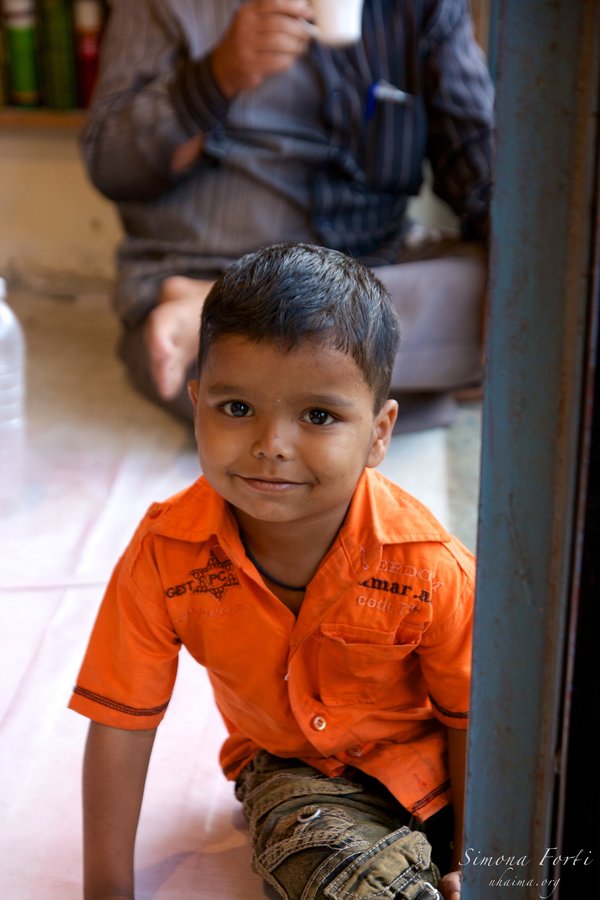
Photo by Simona FortiI therefore chose to bring some short-sleeved t-shirts but above all cotton kurtas and long tunics to pair with loose, non-fitted cotton trousers; a pair of light sandals and a pair of trainers.
This post is from 2013. Content and links may no longer be up to date.
When, a few months ago, I bought my ticket to India I knew nothing, or almost nothing, about this country in terms of organisation and travel tips. So I began a lengthy search to prepare myself, at least “practically”, in the best possible way. India is a very vast country; if you truly intend to see all of it you must make peace with needing at least 2 or 3 months available. I, this time, will have only 16 days and mine will be a somewhat particular journey, since I will be spending most of the time in an ashram — that of my teacher of Kriya Yoga.
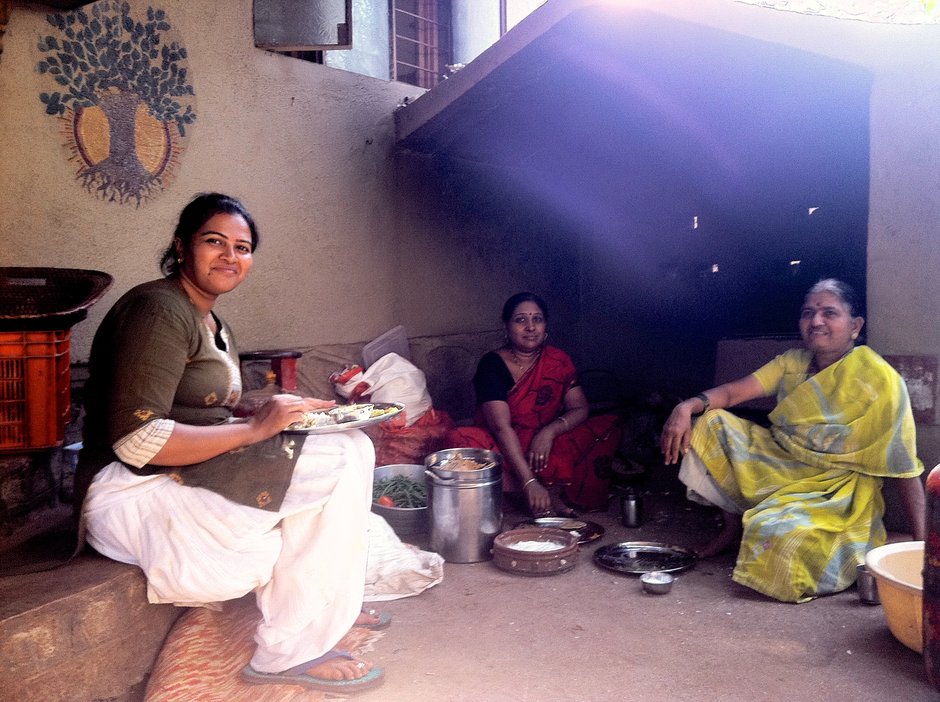
Some cooks in an Ashram in Pune - Photo by Alessandro Ceccarelli
If you want to visit India, the first thing you must do is choose whether to go to Northern India or Southern India. If you look for printed guidebooks, or topics across the web, you will in fact find them divided in this way. For the same reason it is also difficult to define which period is meteorologically best, because the climatic factors are very diverse.
This post is from 2013. Content and links may no longer be up to date.
The trip to Japan, a lifelong dream finally come true.
One of those journeys you have absolutely no plan to make but that almost happens by accident, thanks to an airline offer that lets you buy a return ticket at a truly affordable price.
When I bought the ticket in December I had the possibility of choosing when to travel, somewhere between February and June.
After a great deal of searching, researching, and analysing, I chose late April for two main reasons: the first is that I have always wanted to witness the cherry blossom, which normally occurs between April and May; the second is that spring (March to May), together with autumn (September to November), is one of the best periods to visit.
The climate during these periods is very pleasant, not particularly hot or cold, and so it lets you walk around the cities without any particular difficulty.
It must be said, however, that late April is a holiday period in Japan — the Golden Week — so it is wise to book accommodation well in advance to avoid the risk of finding everything completely full.
Photo by Piermaria Mendolicchio
Since my trip will last around 14 days, and I intend to move around enough to see a bit of the country without getting stuck in just one city, I preferred to use two cities as a “base” for sleeping so as not to have to keep moving from hotel to hotel with luggage in tow.
My bases will be Kyoto and Tokyo plus one night in a Buddhist temple as an interlude between the two cities.