This post is from 2013. Content and links may no longer be up to date.
10:30 pm, we finally land in Mumbai. After a journey of almost 24 hours that began the previous night at my friend’s home, I finally set foot on Indian soil.
A scent of incense accompanies us along the corridor that will take us out of the airport.
The first impact is indescribable.
Stimuli of every kind arrive from every direction; sounds, colours, smells mingling together.
The chaos is incredible; our taxi has yet to arrive and while we wait I find myself unable to do anything but stand hypnotised by what I see before me. However much you may prepare by reading and reading articles, nothing turns out the way you expected or imagined.
The impact is strong, at times overwhelming, and I must be honest — not always pleasant.
Our taxi finally arrives; we get in and I discover they drive on the left as in England. This alone, for those of us accustomed to driving on the other side, creates a certain unease; add to that the fact that Indians drive rather like maniacs and you’re guaranteed a heart attack every other moment. Forget every road rule you know, because here they don’t exist. Absurd overtaking, lanes unmarked, the chances of encountering absolutely anything on the road are extremely high.
The other peculiarity is that everyone constantly honks their horn — it’s a delirium! But apparently it is simply their way, so much so that you find written on trucks and buses “Horn Ok Please”.
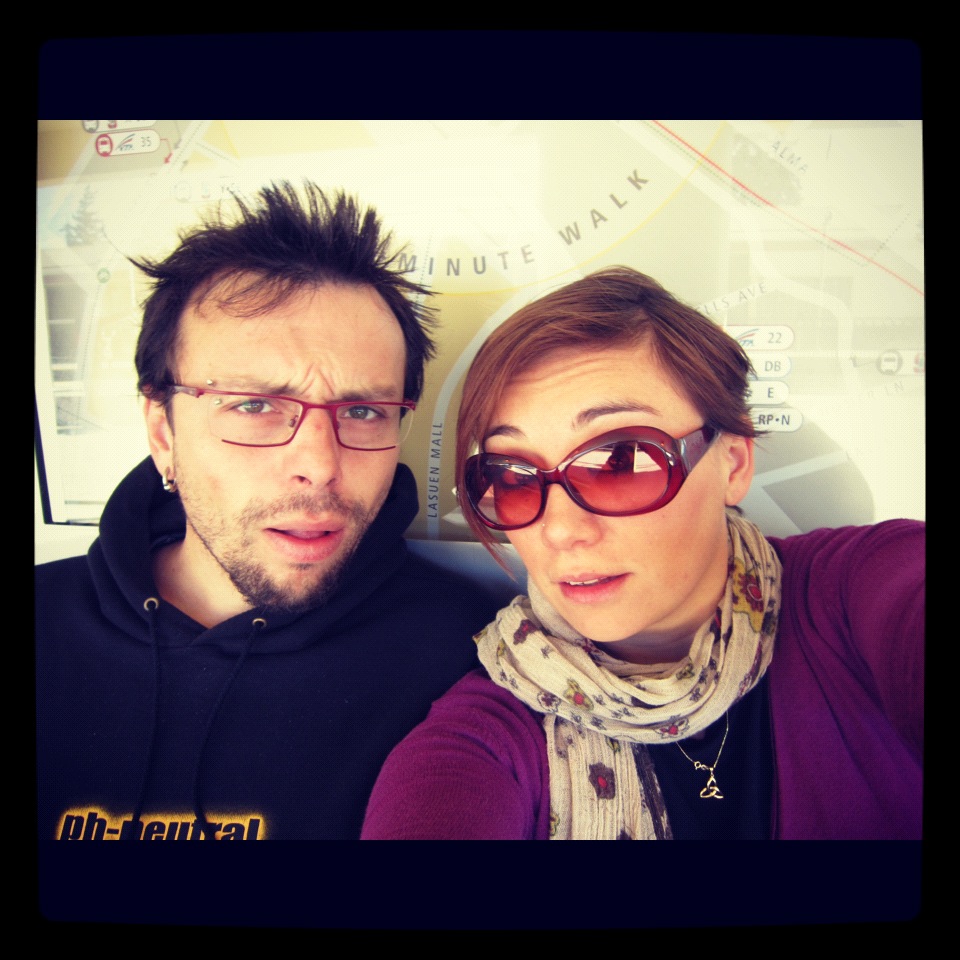
Pune - Simona Forti
We cross a suburban area where poverty appears naked and raw in its entirety. Small children walking barefoot near piles of rubbish or amid the dust and rubble of construction sites; powerful smells of food and something else not quite identifiable; tiny, vividly coloured temples rising up among shacks of every description. India is not a country that shines for its cleanliness — we know this well — so come to terms with it and go only if you have a great capacity for adaptation. And I’m not just talking about the physical kind.
This post is from 2013. Content and links may no longer be up to date.
It was perhaps the most anticipated film of the year, The Hobbit: An Unexpected Journey, out for only a week and already breaking box-office records. Personally I had been eagerly awaiting it — I loved The Lord of the Rings intensely when it came out, and I knew that this time too Peter Jackson would not disappoint me! I will not recount the film here because I don’t want to spoil the experience for those who have not yet seen it, but I can certainly say that, in my view, it is absolutely marvellous! The Hobbit: An Unexpected Journey is the first part of the new trilogy inspired by J.R.R. Tolkien and is the prequel to The Lord of the Rings; indeed, the book The Hobbit was written chronologically first. This trilogy too was filmed almost entirely in that marvellous country that is New Zealand — capable of making anyone dream, even those who are not fans of the fantasy genre. If The Lord of the Rings already made you want to pack your bags and go in search of those vast green hills, this film will make you want to even more!
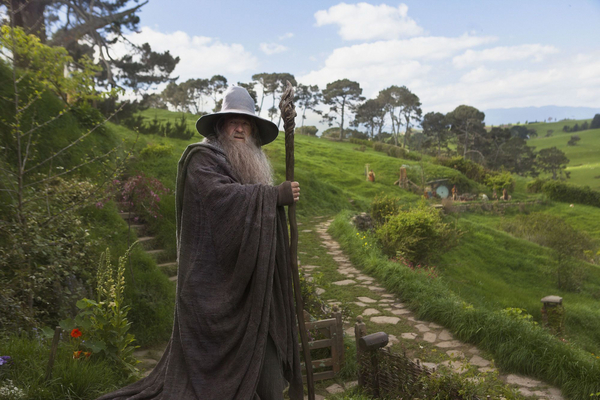
Production photo from "The Hobbit: An Unexpected Journey"
Let us look together at what a possible itinerary might be for discovering New Zealand while reliving the magic of dwarves, elves, wizards and hobbits. The easiest way to begin this tour is to fly into Auckland, New Zealand’s most populous city with over 1.4 million inhabitants, located on the North Island. From there the first stop can only be Hobbiton! The village is genuinely visitable, since the perfectionist director Peter Jackson had it built at Matamata in the Waikato region. You can stroll along the paths trodden by Gandalf the Grey, climb gradually up the hill until you reach Bilbo Baggins’s house, genuinely built in stone and wood, from where his long adventure began.
This post is from 2012. Content and links may no longer be up to date.
Simonetta di Pippo is an Italian astrophysicist who currently holds the role of Special Adviser to the Director General of the ESA — European Space Agency.
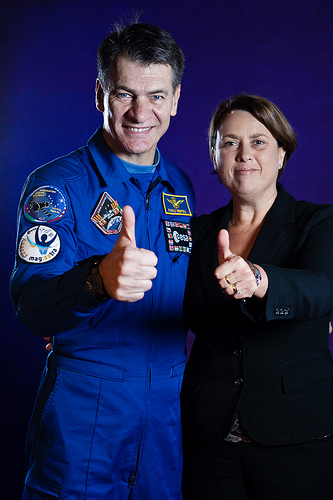
She is a woman with an impressive career to her name: for three years, from 2008 to 2011, she served as Director of Human Spaceflight at the Italian Space Agency; previously she worked on major international projects, including as ESA delegate to the ISS (International Space Station), European expert at NASA on the international Mars exploration programme, she contributed to the development of the Aurora programme for robotic solar system exploration, and in 2007 she was assigned responsibility for the mission of Italian astronaut Paolo Nespoli, aboard Space Shuttle flight STS-120 — which many of you will likely remember for his intense Twitter activity during his last mission.
Author of the book “Astronauti”, and always devoted to her work and mission with great passion, committed to the popularisation of space exploration, I had the extreme pleasure and honour of interviewing her for the readers of Tiragraffi, at the last edition of Frontiers of Interaction, trying to understand her point of view on women in the space sector and on Italy as a protagonist in space exploration.
Simonetta di Pippo and Paolo Nespoli
In your life you have had an intense and glorious career. How and when did you decide to embark on this life and professional path? Was there a particular event that made you understand this was your road?
This post is from 2012. Content and links may no longer be up to date.
Maria la Gorda - Photo by Simona Forti
Thinking that Cuba can be covered in just two articles is absolutely impossible, but in this second “instalment” I will try to give you all those useful tips for planning your first trip to “Monkey Island”. Yes, because Cuba is practically Monkey Island, the game that accompanied the adolescence of so many of us! :-) As I mentioned in the previous post, it is important to plan your trip well; to decide what kind of itinerary to follow, which cities to visit, and above all how much time you have. To truly experience Cuba the best way is to rent a car. Don’t expect, however, to find yourself on comfortable paved roads ready to take you around the whole island in two weeks. Cuba has this great problem: it essentially has only two “roads” that can more or less be called such — the Autopista Nacional and the Carretera Central. The Autopista Nacional is the motorway, though not quite what we understand by the term. There are no tolls to pay; don’t expect large service stations or rest areas. It is simply a large two-lane road that crosses the island from West to East, from Pinar del Río all the way to Sancti Spíritus, passing through Havana. Together with the Carretera Central it is in the best condition for travelling. But the peculiarity of the Autopista lies in what you may encounter along the way. Street vendors of mango paste or guayaba on foot between the two carriageways; horse-drawn carts crossing from one direction to the other, simply passing over the Autopista with all the unhurried calm that characterises this island; groups of people standing under bridges waiting for “people-carrier” trucks to take them to the cities; farmers driving their animals to pasture.
This post is from 2012. Content and links may no longer be up to date.
During my travels in Cuba I always kept a diary of everything I saw and experienced, with the intention of writing about it on the blog.
But condensing into a few posts everything that Marcello and I lived through on two long trips is practically impossible; which is why a small ebook has been in the works for some time, which sooner or later I will finish and publish :)
Cuban Flag - Photo by Simona Forti
Cuba is an island that lets itself be loved. It captivates you completely but allows no middle ground; there are no great compromises. And it is not the way it is portrayed on television or in the papers: all salsa and cuba libre. It is so much more. It is like travelling back in time, where time in reality does not exist. It is as though it had stopped at some “space-time intersection” of parallel universes. You cannot discover it through a tourist guide: you have to live it. However many books you may read about Cuba, they will never be able to make you fully understand its richness. I am obviously starting from the assumption that you have no intention of doing the classic resort-only holiday with sad little souvenir shops. For that there is Varadero, for instance, but know that it has nothing to do with what Cuba really is. It is a country that knows how to enchant with its beaches, its music, its enormously lush nature, its mountains, its breathtaking sunsets, but above all with its people. Tireless inventors, always smiling and helpful. A people capable of conjuring the most absurd riquimbili to take you around the city.
This post is from 2012. Content and links may no longer be up to date.
Last time I talked a little about how to organise a trip, the important things to think about and what not to forget. What I didn’t cover, however, was how to actually choose where to sleep, where to eat, what to see, and most importantly how to buy your flights. I’m obviously starting from the assumption that you want to organise your trip entirely by yourself, or almost; otherwise, if you don’t want to think about absolutely anything, the only solution is to rely on a travel agency. Apart from a few rare exceptions such as Caesar Tour, I have always honestly preferred to avoid agencies and do everything myself. Once you have chosen your destination, the first thing to do is buy your ticket — ideally a few months in advance, so you can often save quite a lot of money. Ideally you would avoid peak seasons like July or August, but I understand that not everyone has the luxury of choosing when to go on holiday; so buying your ticket well in advance can prove very advantageous. In addition to the classic and better-known Expedia and eDreams, two other search engines I use constantly and find useful are Sky-Tours and Kayak. I often prefer these over the first two for their simplicity of use and their clean, navigable interface. It may seem trivial or of little importance, but a difficult-to-use and unclear website can leave the user bewildered and tempted to give up and head to a travel agency instead. Kayak also, once you register on the site, allows you to enter and create your trips, planning them by entering travel information and with the option of sharing them on social networks.
Through the iPhone app it is also possible to always have them with you and consult them once you have departed.
This post is from 2012. Content and links may no longer be up to date.
This is almost certainly not the first article you will read about London, but perhaps yet another in a long series telling you what to visit in the city, how to get around or where to stay. In reality this time I don’t want to offer you a proper mini-guide to London; rather, I want to tell you about London as it appeared to my eyes and how I still feel its absence. London is in some respects the city of “opposites” — the city where you can choose to plunge into the frenzy of people, sounds and colours right in the centre between Piccadilly Circus and Leicester Square; or to take refuge in search of peace and quiet in one of its many beautiful parks.
I remember in this regard one of the most beautiful Easter holidays I have ever spent, right in London, last year. It was Easter, 25 degrees, a warm and enveloping sun, and we — together with many other Londoners — lying on the grass of St. James’s Park, dozing and dreaming. It was not in the least the London I had so often read about: chaotic or noisy. Quite the contrary! It was like being in a different London, completely unlike how it is normally described; it was a calm, pleasant London, almost like a provincial town. London is the city that gives you the possibility of spending entire days immersed in art and culture, very often without paying a single pound. Places like the Tate Modern, or the immense British Museum, or the National Gallery are all absolutely free. Incredible works of art or entire periods of history made available to everyone, which you can choose to visit for whole days at a time. I remember the first day I arrived in London for the first time, on a morning in August many years ago — the very first sensation I felt, despite not knowing the city at all, was one of “home”. I knew nothing of London, beyond the few directions I had been given to reach the place where I would be staying. But its welcoming nature, its “internationality”, never truly made me feel like a foreigner.
This post is from 2012. Content and links may no longer be up to date.
When you decide to set off on a trip, short or long, it is always wise to be organised in order to avoid unpleasant surprises along the way. If you intend to travel to the other side of the world for a few weeks, the best thing would be to begin preparations at least two or three months in advance. Ideally you will have already chosen your destination and perhaps even bought your flights :) Purchasing the ticket well in advance allows you to save considerably on cost. The first thing to check is your documents: verify that your passport has at least 6 months of validity; virtually every country now requires this, and the 6 months are counted from the moment you request entry, so it is a fundamental prerequisite you cannot overlook. Find out which visas are necessary, whether you need medical insurance, or whether you need any vaccinations. Very often you can request these documents online or at any travel agency, regardless of whether you bought your ticket or trip through them. Study the country you will be visiting: its culture, customs, what type of electrical voltage they use; perhaps learn a few words of the local language. Depending on the time of year you choose to travel, find out about the climate you will encounter so you can pack appropriately; if you also plan to go diving, find out about the water temperature: having a 3mm wetsuit in 20-degree water will leave you very cold :) If you are going to a tropical country, check whether you will be visiting during hurricane season; for this you might also need a windproof jacket to shelter from the rain or a lightweight waterproof.
This post is from 2012. Content and links may no longer be up to date.
I had barely returned last week from my first diving trip in the Philippines when I was already off again, bound for San Francisco! Alas, I had only 4 days available, as I was accompanying my partner for work reasons, but they were enough to show him the main attractions. To be entirely honest, I’m not particularly fond of the United States, but San Francisco has that certain something that, even 15 years ago, left me enchanted.
Three days and so much to see: where to begin? We started at Pier 39, a San Francisco classic. A place full of shops, typical tourist shopping and restaurants. So if you love giving gadgets and kitsch objects as gifts, this is the place for you: from Alcatraz souvenirs to Golden Gate ones, to shops selling exclusively every imaginable type of magnet. We went there to admire the clusters of sea lions basking in the sun on wooden platforms, happily posing for the multitude of tourists who stroll the pier every day.
Another interesting thing to visit, if you love the sea and the marine world, is without doubt the Aquarium of the Bay. After a first room with tanks containing fish of various kinds, you descend to the lower floor where the real spectacle awaits: an underwater tunnel from which you can admire large tunas, elegant manta rays and beautiful sharks. You’ll feel as though you are truly underwater alongside them! Of course it’s not the same thrill as when I dive, but I must say it comes remarkably close :-) Once at Pier 39 you need only continue along the Embarcadero, reach Fisherman’s Wharf and admire the Golden Gate in all its grandeur, which at sunset always offers beautiful photographic moments.
This post is from 2012. Content and links may no longer be up to date.
I’m not fond of Valentine’s Day, nor of the consumerism and compulsive, almost diabetic spamming that comes with it.
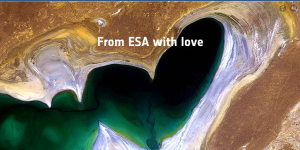
But I love science and space exploration, and I simply could not remain indifferent to this little gem: a delightful greeting video produced by the ESA :)
So, best wishes to all those in love with science :)
 Pune - Simona Forti