This post is from 2013. Content and links may no longer be up to date.
Kyoto was without doubt one of the cities that has remained most deeply in my heart.
Known above all as the city of the geisha — where you can still encounter them walking along the streets of the Gion district — Kyoto is the city you absolutely must not miss if you are seeking the atmosphere of Japanese tradition.
Shinto shrine at Fushimi Inari near KyotoAlthough Kyoto is itself a vast city, with its enormous shopping centres, the lights and colours typical of Japan, it has managed to maintain and preserve its more traditional side — the one that makes you feel a little as though you are inside a film, that evokes wonderful sensations, that truly lets you see and understand Japanese culture. There is an infinite amount to see in Kyoto, so I will limit myself to telling you about what I visited and what I think is worth seeing.
Kyoto is situated in the Kansai region and is also known as the “city of a thousand temples” because of the countless temples and shrines that can be visited. One stop that absolutely must not be missed is “Fushimi Inari”. Fushimi Inari is a Shinto shrine situated at the top of a mountain, reachable via a roughly 4-km route formed by thousands of red torii — the traditional Japanese portal marking the entrance to a Shinto sacred area. Walking along this tunnel of red torii is truly very evocative; the route is fairly straightforward but long, and if you are not quite fit it may leave you a little breathless. But along the way there are several rest areas where you can get a drink or something to eat. There are also numerous — in fact countless — areas with other marvellous temples and shrines to visit. The shrine is easily reached at JR Inari station, 10 minutes from Kyoto’s central station.
Path of red torii at Fushimi InariAnother truly evocative place was the Bamboo Grove. It is at JR Arashiyama station, 5 minutes from Kyoto Station. The long bamboo path will transport you into another dimension. Every kind of noise fades away; you hear only the rustling of leaves and the chirping of birds. Once you enter the path the temperature changes considerably, and along the way there are some temples or small shrines to visit. Bamboo is an extraordinary tree — its trunk can reach incredible diameters — and throughout this area I noticed that virtually everything is made from its wood.
If you love manga as I do, you cannot miss the International Kyoto Manga Museum. The museum holds no fewer than 300,000 comics that, beyond being on display, can also be consulted and read. It is not merely a simple museum with permanent and temporary exhibitions, but also a "library" to which you can gain access on an annual subscription. Paradise for lovers of Japanese comics. In the largest room, "Wall of Manga", they are arranged by year of publication, from 1970 to 2005. They are all in Japanese, of course, though at the entrance there is also a good selection of comics in other languages, including Italian. The Kyoto Manga Museum is easily reached by bus 50 or 101 from Kyoto Station, and admission is 800 yen.
Kyoto Manga MuseumFinally, you cannot come to Kyoto without having visited at least once the district of Gion, the famous district of teahouses and geisha, made even more famous by the film "Memoirs of a Geisha". I must admit, however, that among all the things I visited this was perhaps the one I enjoyed least, despite my great admiration for the figure of the geisha as an artist. Not so much because of the district itself, but because of the many "commercial" establishments exploiting that image that we encountered. It nonetheless has its own charm; of the whole district I particularly loved two streets, which are right at the heart of the quarter and which are indeed the most "old and traditional" I have ever seen. The houses, establishments and restaurants built entirely of wood, signs in Japanese only, and it was almost impossible to tell what was actually happening inside these structures. The street is crossed by a small river with bridges connecting the establishments along the road, and all of this makes the district even more evocative. You walk along the street and almost seem to hear the barely perceptible sound of the okobo, the traditional wooden sandals worn by maiko. It makes you feel as though you are in a film, without a shadow of a doubt. If you are wondering whether I encountered any geisha — yes, I did see them. I saw them strolling and I saw them welcoming and entertaining men inside an establishment. They are beautiful, wearing magnificent kimono, and they are so graceful and feminine that I could have stayed there for hours watching them. The district is easily reached by bus 206 from Kyoto Station.
A glimpse of the Gion district in KyotoThe district of Higashiyama is also worth a visit, where you can find tea shops and Japanese craft shops selling unusual and distinctive gifts and souvenirs.
Where to sleep:
In Kyoto I wanted tradition, typical Japanese culture, and so I booked five nights in a ryokan — a traditional ryokan. The ryokan is in fact the traditional Japanese inn; you know those rooms whose doors and windows slide and are made of wood and rice-paper, where you find a futon instead of a bed and tatami (rice-straw wicker panels) instead of flooring, with small tables almost at floor level and legless chairs? That is exactly it! And I must say I chose an adorable one. Heianbo, a five-minute walk from the station. The staff were adorable and very kind; naturally shoes had to be left outside at the entrance and you walked barefoot or in the slippers provided. Some rooms have a shared bathroom, but it was so clean it barely seemed shared at all. They also have the classic Japanese bath — an onsen-style bath — a bathtub with water at 41 degrees that you can immerse yourself in only and exclusively after having carefully washed and rinsed off the soap. And they also have a small Zen garden inside, the typical breakfast is delicious and generous, and they have free Wi-Fi throughout. Highly recommended.
Kyoto is the city I absolutely want to return to, where five days were not enough for me, and I would probably organise my next trip to Japan starting from there and staying longer to have the peace of mind to visit everything that deserves to be seen. If you go to Japan, Kyoto will remain in your heart.
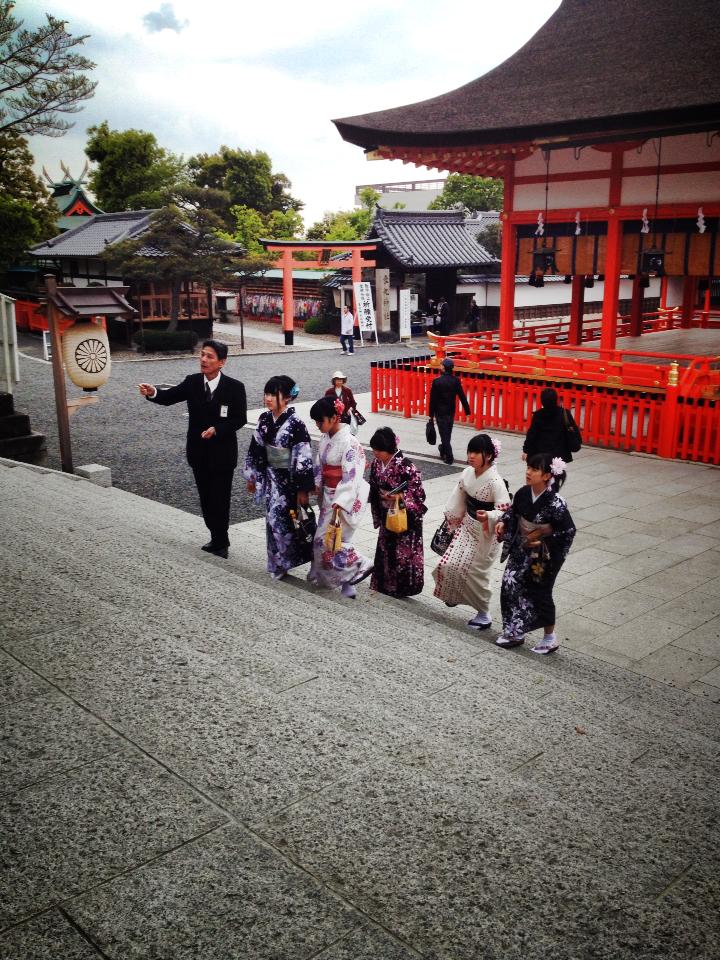
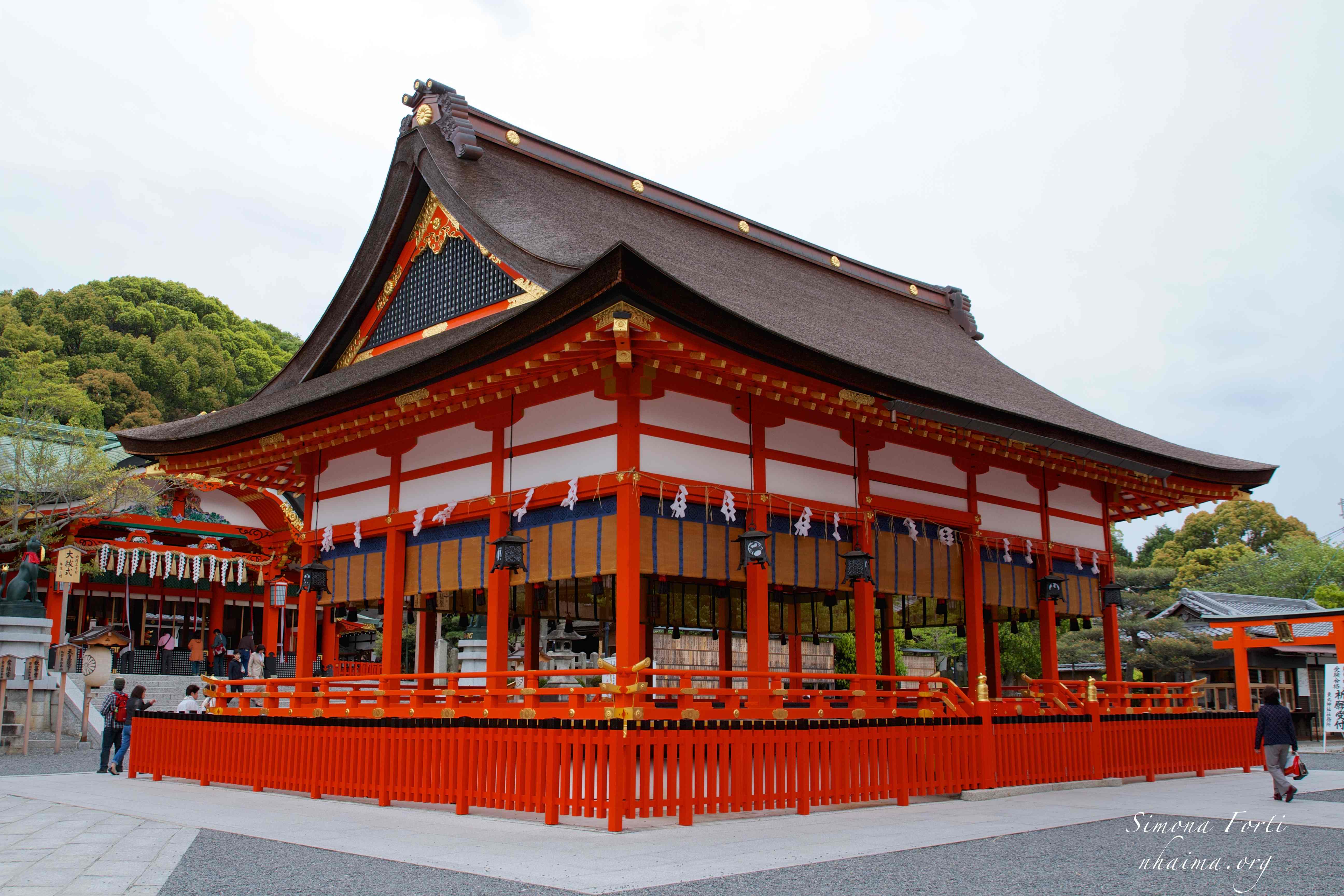 Shinto shrine at Fushimi Inari near Kyoto
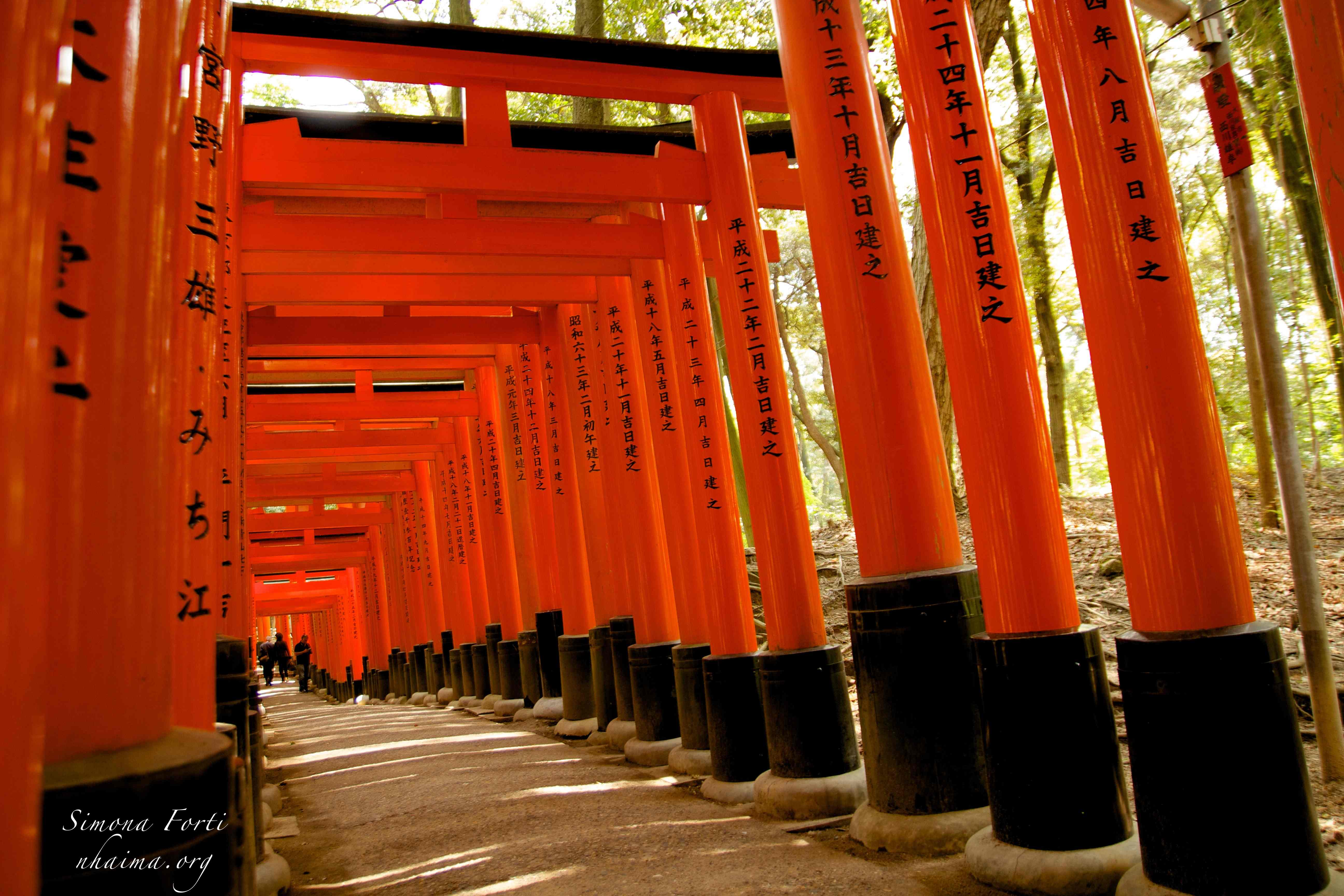 Path of red torii at Fushimi Inari
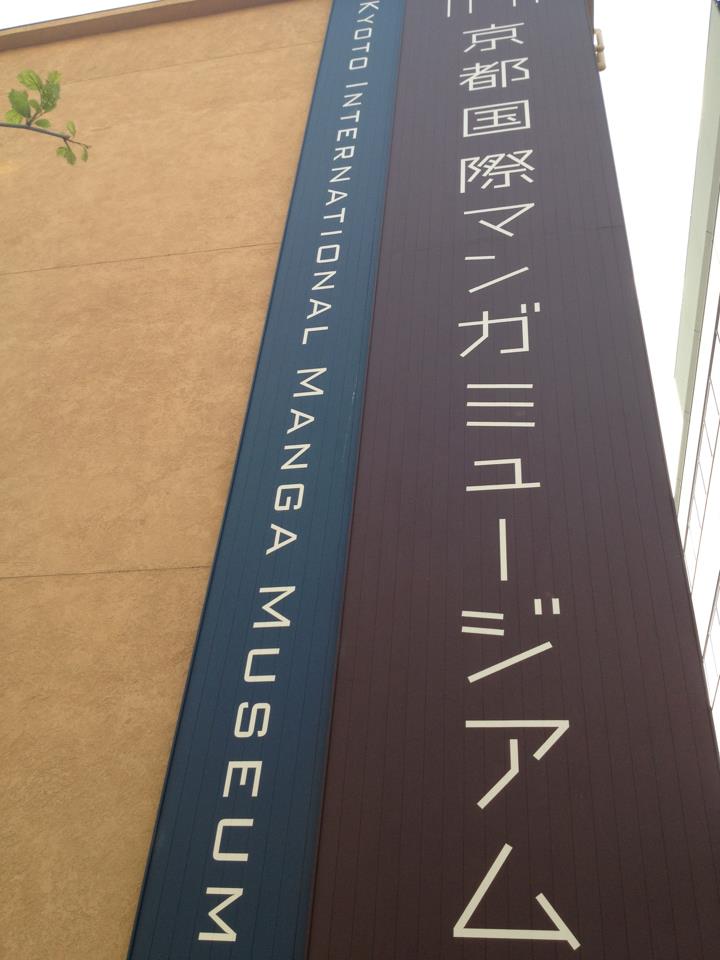 Kyoto Manga Museum
 A glimpse of the Gion district in Kyoto