Here where I am, in Tokyo, it is evening — almost night.
Where you are there is still sun, and perhaps you are out somewhere eating an ice cream.
God, how I would love an ice cream right now — hazelnut and pistachio. And maybe some cream on top.
I really should be making dinner, but I have no desire to. I will smoke something, then sleep. Maybe, if Morpheus deigns to grant me the favour.
Perhaps first I will sink into the bath, water at 38 degrees to dissolve some of these thoughts.
The ofuro: something the Japanese cannot do without. It is more than a habit — it is an almost constant element of their daily life.
Today I needed to hear from you, but while I was trying to prise my eyes open after a somewhat sleepless night, you were going to bed, or perhaps already asleep. And who am I to interrupt your sleep? That precious moment of the day that I am beginning, a little, to forget what it feels like.
To tell the truth, I did pick up my phone, did open WhatsApp, was given a smile — but then I let it go.
I waited 8 hours.
7 time zones plus one. To give you at least enough time to get your coffee and realise a new day had begun; while mine was slowly drawing to a close.
I waited 8 hours.
8 hours imagining you awake and daydreaming about how you might have spent this last Sunday in May. Who knows what the weather is like where you live; I could find out in an instant, but I enjoy ignoring it and carrying on imagining.
Interior, night. Room 503-A of the Akamonkai Nippori Ryo. It is the eve of the weekend and it all began only two weeks ago. It is raining; the wind has finally stopped chasing itself up the stairwell of this building, and I can now perceive almost every single sound — and silence — of the lives in these apartments.
The earth, however, is trembling. Light, constant, sometimes imperceptible; other times with more intention. It does so often, when you least expect it; and even though you know it will happen again, you never find yourself quite ready enough to go along with it.
Japan is like this — it trembles often — and little by little you get used to it; it is a bit like an uninvited friend who drops in unannounced every so often.
Though, to be honest, I do not know whether I will ever truly get used to it. But my days are slowly filling with habits and rituals, with a whole new everyday routine that I like, that makes me feel light, fresh, full of life, charged with an energy I had forgotten.
There is the 8:30 alarm for work, messages with the family who gets up early to go to the office and cannot wait to hear from me, and school that takes up most of my week. Then there is the 4:30 ritual — the phone call with the people I love, while I walk through the streets of Nippori towards the Main Campus library where my new classmates are waiting to study together; the walks around Yanaka, the shopping at Inageya, coffee for everyone on Sunday morning up on the terrace.
I do not know where to begin, so I will say it all in one breath: I am moving to Tokyo!
Yes, I made it! Those who know me a little will understand that this is practically a dream come true — and to tell the truth, I still cannot quite believe it entirely :D
I am in a very particular mix of feelings that are difficult to describe.
I am used to travelling alone and for long stretches — I have done so since I was young, since my school days — but this time it is quite different.
In the dimension of travel in which, for better or worse, I had always moved, I was at ease because I had no great worries; I knew with relative certainty when I would return, roughly what I would see and how I would get around; there was no fear or confusion, there was mainly excitement, joy, and a great deal of curiosity to visit and experience a new country and a culture unknown to me.
There was movement, however slow.
Now, by contrast, there is something entirely different, something opposite: there is “stability.” A stability that, even if temporary (perhaps — who knows), I am transplanting completely into another country.
Because in Tokyo I will go to school every day to study the Japanese language, I will have a home to share, a job, groceries to buy, bills to pay, a city to discover and friends to meet. In short, that “normal” life which, for better or worse, I have always led here in my hometown or in Ventotene during the diving season.
It is her, the Palermo I miss.
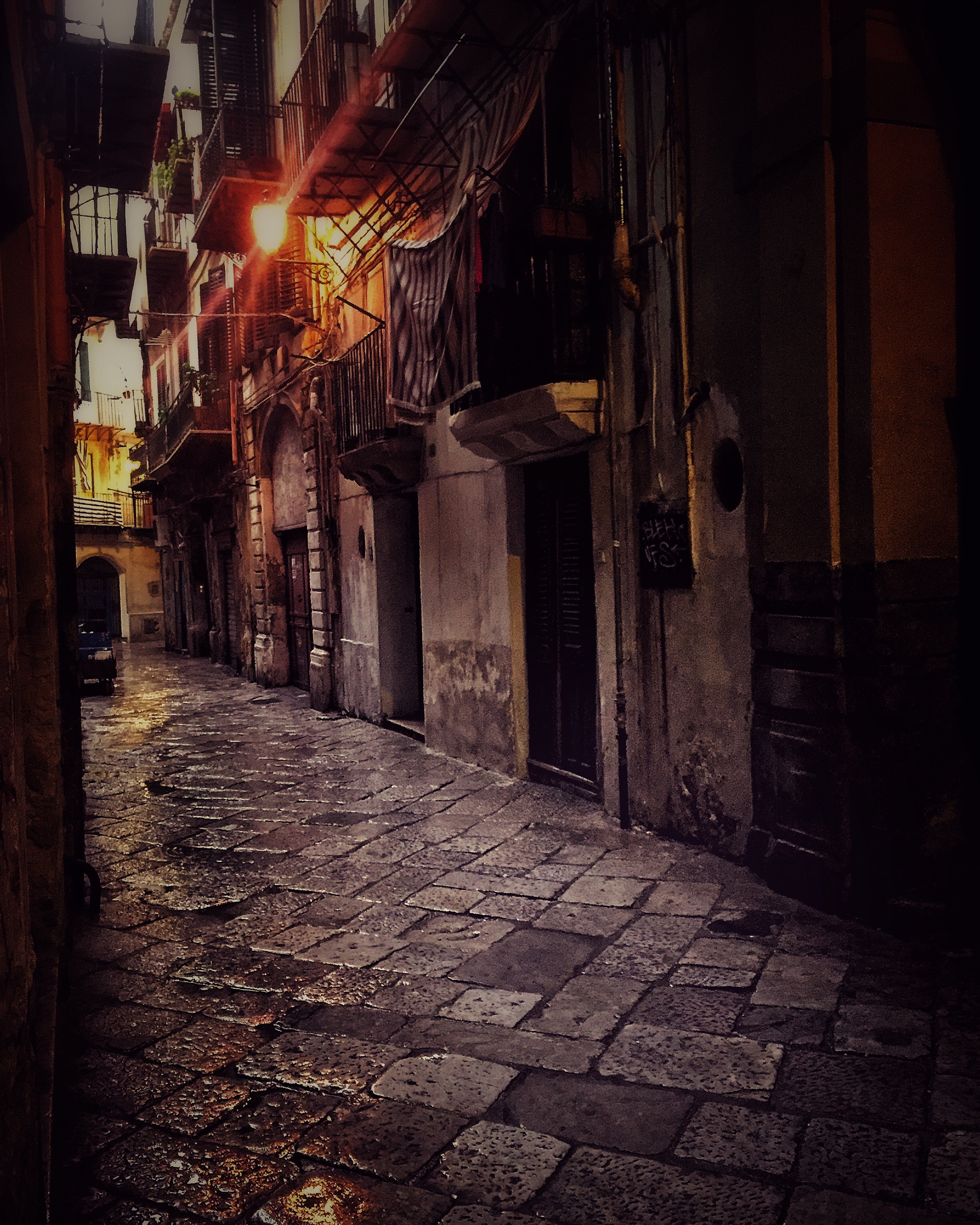
The one that is never spoken of, never told. The one that reveals itself, decadent and visceral, in the rain.
It is her, the Palermo of memories.
The one you cannot see, the one that shouts at you and won’t let you sleep. The one that hides naked behind the facades of its palaces.
It is her, the Palermo of my thoughts.
The one that bewitches you, ingratiating and brazen. The one that devours you and then spits you back out. The one that seduces you and drags you inside with it.
It is Palermo. The one I came to know, the one that swept me away.
The only one I could call such.
This post is from 2015. Content and links may no longer be up to date.
I thought long and hard about how to frame this post (wordplay aside); what “tone” to give it, what kind of message I wanted to convey, and which words to use as an opening.
There are many thoughts in my head and many emotions inside me; I tried to shed light on which ones I wanted to put down in black and white for you, but, as always, when I think too hard about something, when I try to "box it in" within certain boundaries, I cannot find my way out.
My creativity, my natural inspiration, the inner flow of my thoughts, my emotions, my very life — they switch off and vanish.
And so today, my usual cup of tea in hand, all at once letting everything else I was doing go, I opened this blank page and started writing.
In my mind it is clear what I want to say, cutting to the chase without too many roundabout tales and digressions.
I am working on a new project — or rather, on my project.
A big, difficult, exciting project that I cannot wait to set in motion.
A project that is on one hand "hard-won" but deeply desired; a project that obviously entails a journey, a great journey.
And it could hardly be otherwise, given my nature as a tireless traveller — which I have, in truth, never quite managed to tell you about.
Often these journeys, these projects, spring from great changes or events that happen during a person's life; and in my case, it is a little like that too.
This post is from 2014. Content and links may no longer be up to date.
I have always travelled; it is the strongest memory I have from childhood. I travelled a great deal with my grandparents during my primary-school years: in June, once school was out, they would take me with them to Calabria and bring me back to Rome in September, just in time for the new school year.
I also travelled quite a bit with my parents, up to the age of about 15 or 16 — skiing holidays, weekends away, my first big trip to the United States for a month, and summer holidays down by the sea in Calabria.
But above all I travelled an enormous amount on my own. And I started doing so very early. I have always been a girl with a strong desire for independence, which my mother knows well; she will probably never forget the days and nights I put her through with worry, because at 17 I was already leaving home — once to Turin, once to Pescara, once to the Netherlands to attend a large international hackers’ gathering. And I always travelled very light: in my backpack I kept only the essentials, a book, a notebook, and my inseparable CD player (a tremendous must-have at the time). I did not even know what a suitcase or a trolley bag was. I kept on like that for years — on Saturdays, the moment school ended at one o’clock, I would run to the station to catch the train and reach all those people the internet had given me and whom I absolutely wanted to meet.
This post is from 2014. Content and links may no longer be up to date.
Sometimes, more than with words, I like to tell the story of a place through images. There are places you can barely begin to explain in words — their light, their colours, the emotions they stir in you.
Helsinki and Stockholm are certainly among them, and that is why I chose 10 photographs, taken by me, to give you a sense of what this wonderful week of the Nordic Bloggers’ Experience was for me. A special thank-you once again to Inna-Pirjetta Lahti, Sebastian Canaves, Visit Finland and Visit Helsinki :)
This post is from 2014. Content and links may no longer be up to date.
I believe that if you go to Japan — assuming you have enough days, of course — you cannot skip this city: a symbol of tragedy but, at the same time, also of human strength and the will to be reborn.
Hiroshima is the city razed to the ground on 6 August 1945 by the first atomic bomb dropped by the United States Air Force, which destroyed roughly 98% of its buildings and killed 70,000 people, with further deaths in the months that followed from radiation. Looking at Hiroshima today, with its skyscrapers and its modernity, one cannot grasp the immensity of the tragedy it endured; but you only have to reach the Peace Park to gaze upon the Atomic Bomb Dome, or set foot inside the Hiroshima Peace Memorial Museum, and everything becomes tremendously clear.
The “attractions” — if we want to call them that — of Hiroshima are almost entirely concentrated in a single area, making them easy to visit in half a day. You begin at the Peace Park, a vast park that draws hundreds of Japanese visitors every day, mostly students, within which stand the Atomic Bomb Dome, the Hiroshima Peace Memorial Museum, and the monument dedicated to Sadako Sasaki.
The Atomic Bomb Dome — Photo by Simona FortiSadako Sasaki was a child who survived the atomic bombing but later fell ill with leukaemia and, before dying, folded by hand a great many paper cranes, because an ancient legend says that if you manage to make a thousand cranes you may be granted a wish. It is not so much the monument itself, but the tens of thousands of origami cranes kept nearby, that make the whole thing deeply moving.
The origami cranes — Photo by Simona FortiJust behind this monument, still inside the Peace Park, declared a UNESCO World Heritage Site, stands the Atomic Bomb Dome — the only building left standing after the bomb exploded. There are few words to describe it, let alone to describe the emotions its sight provokes. It sends shivers down your spine.
The Atomic Bomb Dome — Photo by Simona FortiThe Atomic Bomb Dome, also a UNESCO World Heritage Site, was the headquarters of the Hiroshima Prefectural Industrial Promotion Hall, and what remains of it is partly the dome and some partial sides of the whole structure. The Atomic Bomb Dome is practically the best-known monument in Hiroshima and is the symbol of the city's destruction, but also of the strength with which the Japanese managed to rebuild an entire city literally from its rubble. Next to the monument, in all likelihood, you will encounter a man seated in a chair with a series of photographs hanging on a line. He is a man who, incredibly, survived both the blast and the illnesses contracted from the resulting radiation. He is there, asking nothing, to bear witness — to tell people like us, completely ignorant of what really happened, the truth about those terrible days.
Detail of the A-Bomb Dome — Photo by Simona FortiThe emotionally powerful journey you undertake through Hiroshima culminates in a visit to the Hiroshima Peace Memorial Museum. It is undoubtedly the most harrowing part, where everything is recounted through images, reconstructions, and remnants of that dreadful August day. You are greeted by a photograph of a clock frozen at exactly 8:15, the moment the bomb exploded over Japanese soil, and then you move through a series of stark testimonies from the era. What struck me most? A digital day-counter showing the number of days elapsed since the first atomic bomb exploded: 24,732 — and the number of days since the last nuclear test: 70! (as of April 2013) The day counter at the Peace Museum — Photo by Simona FortiAt this point, to ease the weight of the visit somewhat, I recommend taking the ferry from the port and heading to the nearby island of Miyajima — about 5 to 10 minutes away. You know that famous image of a great red torii standing immense in the middle of the water? That is precisely what you will see as soon as you arrive on the island. Miyajima is a sacred island of Japan where it is said that both men and gods dwell, and where legend has it that one can neither be born nor die. There are many temples to visit, above all the Daishouin Temple and the Yakushinyoraizazou Temple.
Reaching Hiroshima is very easy via the Shinkansen bullet trains, which you can board using the JR Pass. It is about an hour from Kyoto and four from Tokyo. The JR Pass can also be used on the ferry to Miyajima.
This post is from 2013. Content and links may no longer be up to date.
A journey into the wonders of Japanese animation
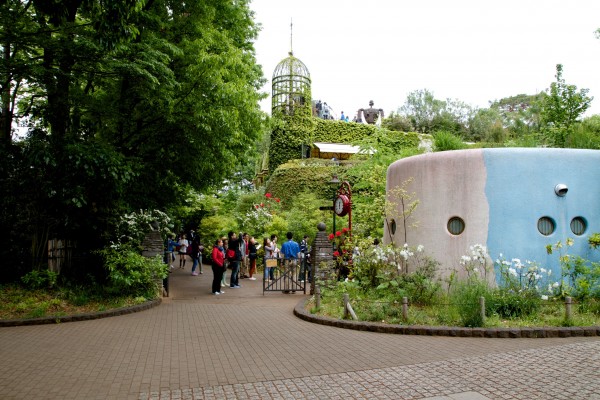
For lovers of Japanese animation and of the master Hayao Miyazaki, there is a magical place that absolutely cannot be missed if you are travelling to Tokyo. This place is the Ghibli Museum of Art, situated in Mitaka, a district to the west of Tokyo, about 20 km from the centre, reachable in approximately 20 to 30 minutes from Shinjuku.
Museum exterior entrance - Photo by Marcello Barnaba
Visiting the museum is like stepping completely inside one of Miyazaki’s animated films, with all its magic, its fascination, its extraordinary genius. The Museum has been open since 2001 and was strongly desired — and entirely designed — by Hayao Miyazaki. Exactly as he does for his films, for the museum too he first sketched drawings and drafts and then handed everything to the team so they could create an incredible structure from them.
The Museum is situated inside a park, surrounded by greenery, and extends upwards rather than horizontally. At the entrance is a large, very high hall, where on one side you will find the cinema in which you can watch one of the short films projected exclusively at the museum, while on the other side a series of small rooms unfolds where you can observe and interact with the various animation mechanisms used for the production of the films.
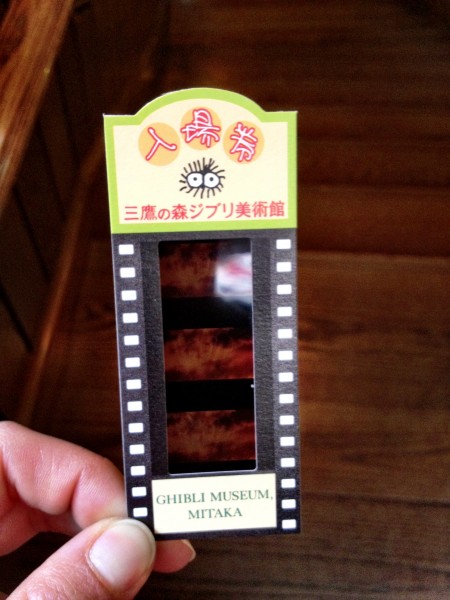
Cinema ticket - Photo by Simona Forti
Going up to the next floor, there is then the room for younger visitors, where honestly I would have liked to go in myself. This room houses a large “Neko Bus” where children can play and have fun, sitting inside it just as in the film “My Neighbour Totoro” :-D On the same floor you will find the souvenir shop “Mamma Aiuto!” where you can buy absolutely everything! Pins, notebooks, plush toys, magnets, small towels, t-shirts, character figurines, and much more. A true paradise for lovers of his films.




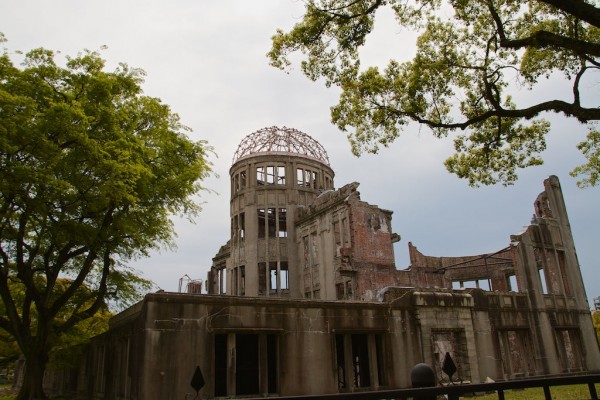 The Atomic Bomb Dome — Photo by Simona Forti
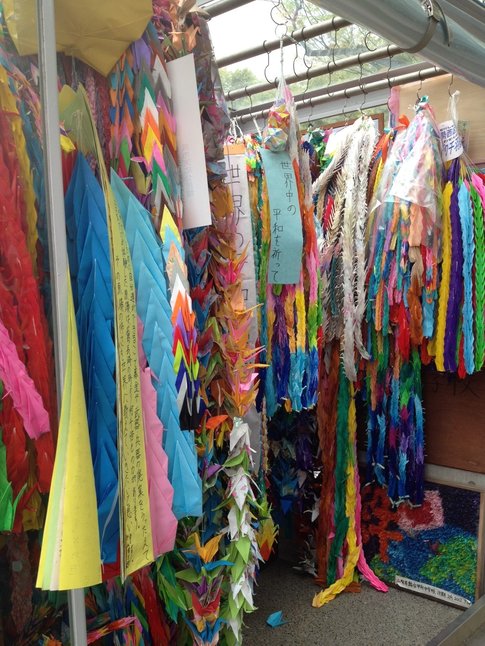 The origami cranes — Photo by Simona Forti
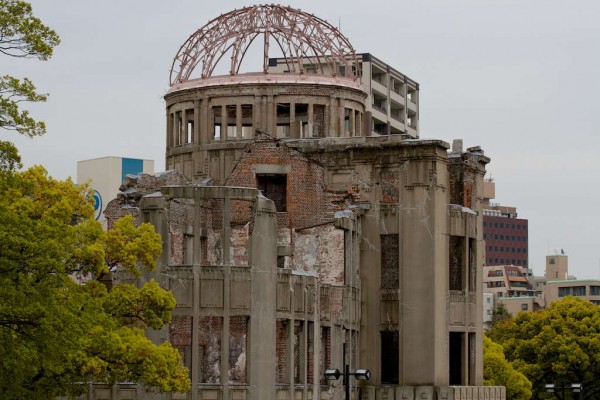 The Atomic Bomb Dome — Photo by Simona Forti
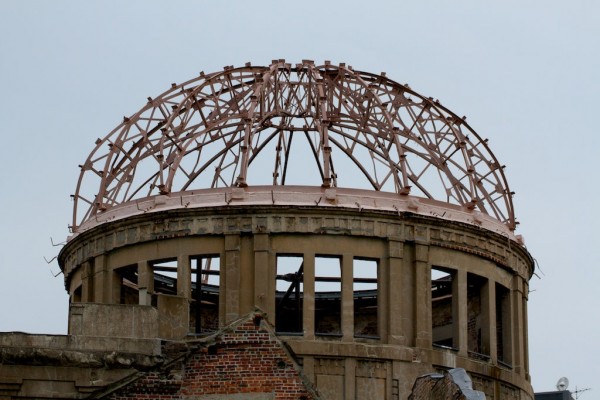 Detail of the A-Bomb Dome — Photo by Simona Forti
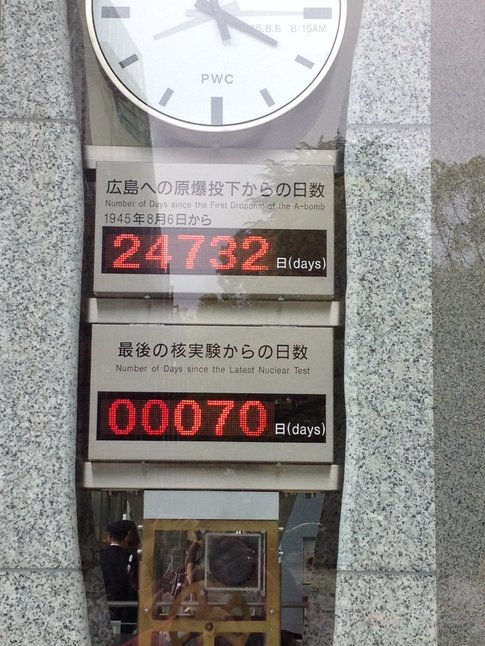 The day counter at the Peace Museum — Photo by Simona Forti