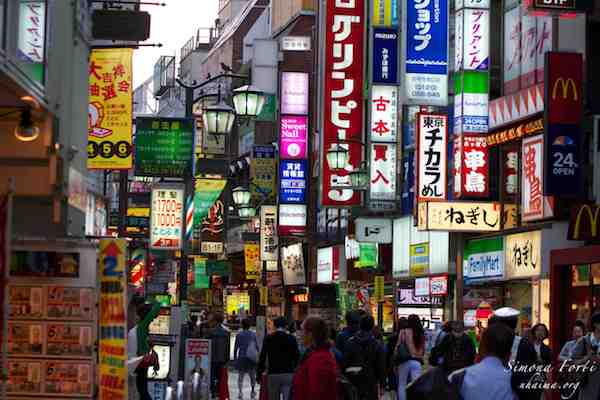
Japan is one of those places to visit at least once in a lifetime. It is a marvellous country, a country where you truly understand what respect means — respect for other human beings and for the land — where everything works perfectly, where people tend towards collaboration and cooperation rather than individualism. It is a country that can change very quickly, even simply by passing from one street to the next; from the delirium of lights, colours and sounds of a certain Tokyo neighbourhood to the more traditional and ancient atmosphere of Kyoto.
It is a country where people are not, in truth, cold or impenetrable as is often believed or said; they are simply terribly shy, extremely careful not to disturb others — especially foreigners — and deeply honest. And it is not even true that it is such an expensive or unapproachable country as one might think. With the right precautions you can do a trip to Japan of 10 or 14 days without spending a fortune.
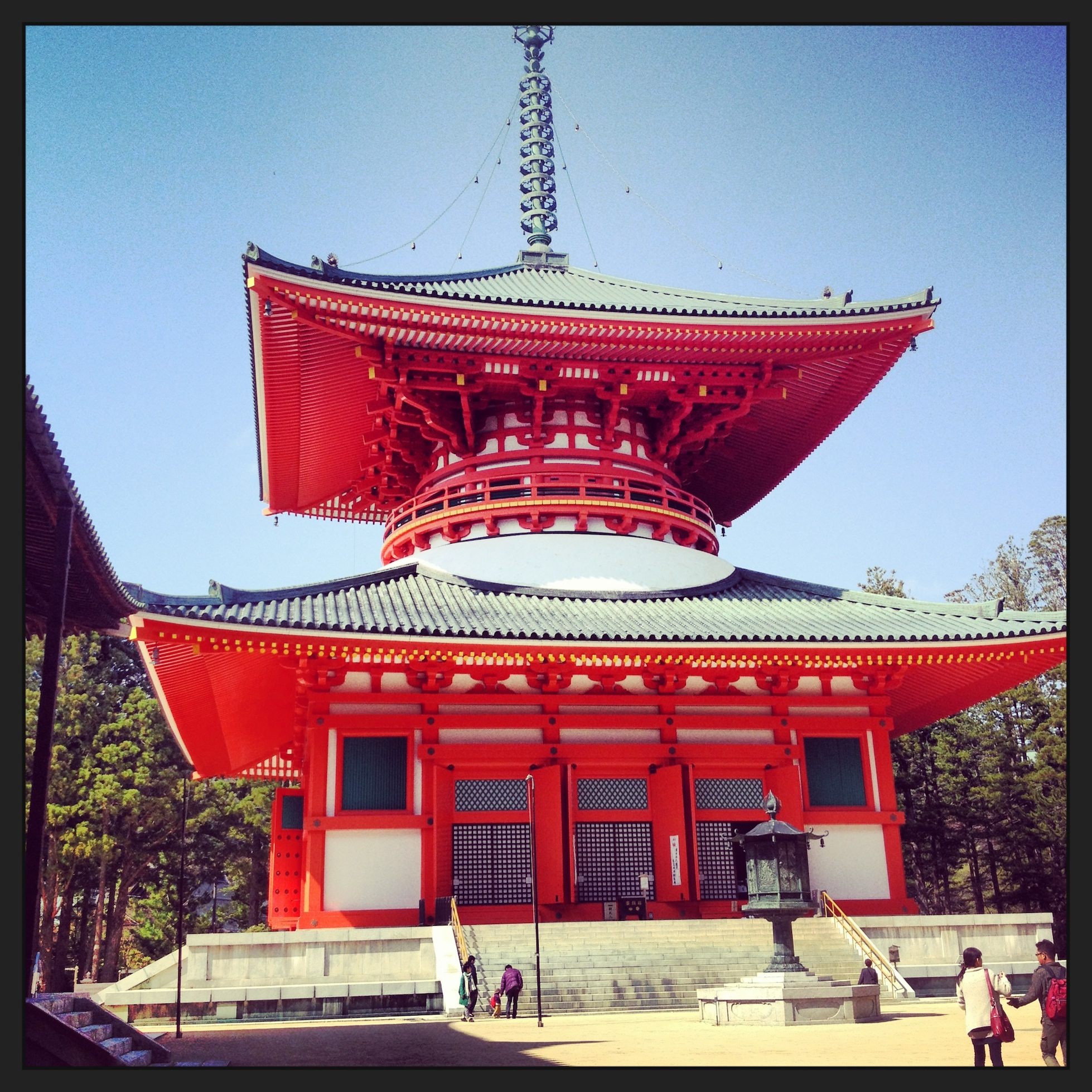 Buddhist Temple at Koyasan
Flying The main trick here is to catch the offers that airlines often make on long-haul flights. Qatar Airways, for example — the one we flew with — does them frequently. In December 2012 an offer came out with 35% off a huge number of destinations including Tokyo; the return ticket cost us only €520. It is also wise to choose periods that are not peak season; avoid summer as much as possible, both for the cost of the ticket and for the monstrous heat during that period. Spring and autumn are the best periods.
Sleeping The winning move is to stay with Airbnb. For many reasons, including the saving and the possibility of truly making contact with the culture of the country. I had never used it before Japan and I must say I loved it. Our hosts were an international couple — she Japanese and he American — lovely, very helpful and extremely kind. Ours was a private room, a typical Japanese room with the tatami, the Japanese floor made of rice-straw panels, and the futon, the classic Japanese bed. Incredibly comfortable!
With them, for example, a week costs around €200 — obviously I am talking about the cost per room, not per person. The best thing is to avoid accommodation in the central areas of Tokyo or in the most famous neighbourhoods like Shibuya, Ikebukuro or Roppongi, but to prefer areas that are a little more peripheral yet still well connected by the metro. Our apartment was in Musashino, at Musashi-Sakai station on the JR Chuo Line; we were 5 minutes from the Ghibli Museum, 15 minutes from Shinjuku and 20 from Shibuya and Tokyo Station — practically perfect!
 Nara
Nara
Getting around The best thing to do, if you intend not to stay in the same city the whole time but to move around and perhaps even take day trips, is the Japan Rail Pass. This pass lets you use all JR lines — trains, metro and ferries — including the shinkansen. Draft a rough itinerary first to understand whether the 7-day or 14-day option suits you better. If, for example, you will be spending 10 or 12 days in Japan with perhaps 4 of them in Tokyo, the 7-day pass is the better choice. If you plan to go to Kyoto as well, the pass will be particularly useful because in a single day each you can also visit Nara (adorable!), Osaka, Hiroshima and the island of Miyajima, with at most an hour’s train journey. The best site to purchase it is HIS, where the 7-day second-class pass costs €213 and the 14-day one €339.
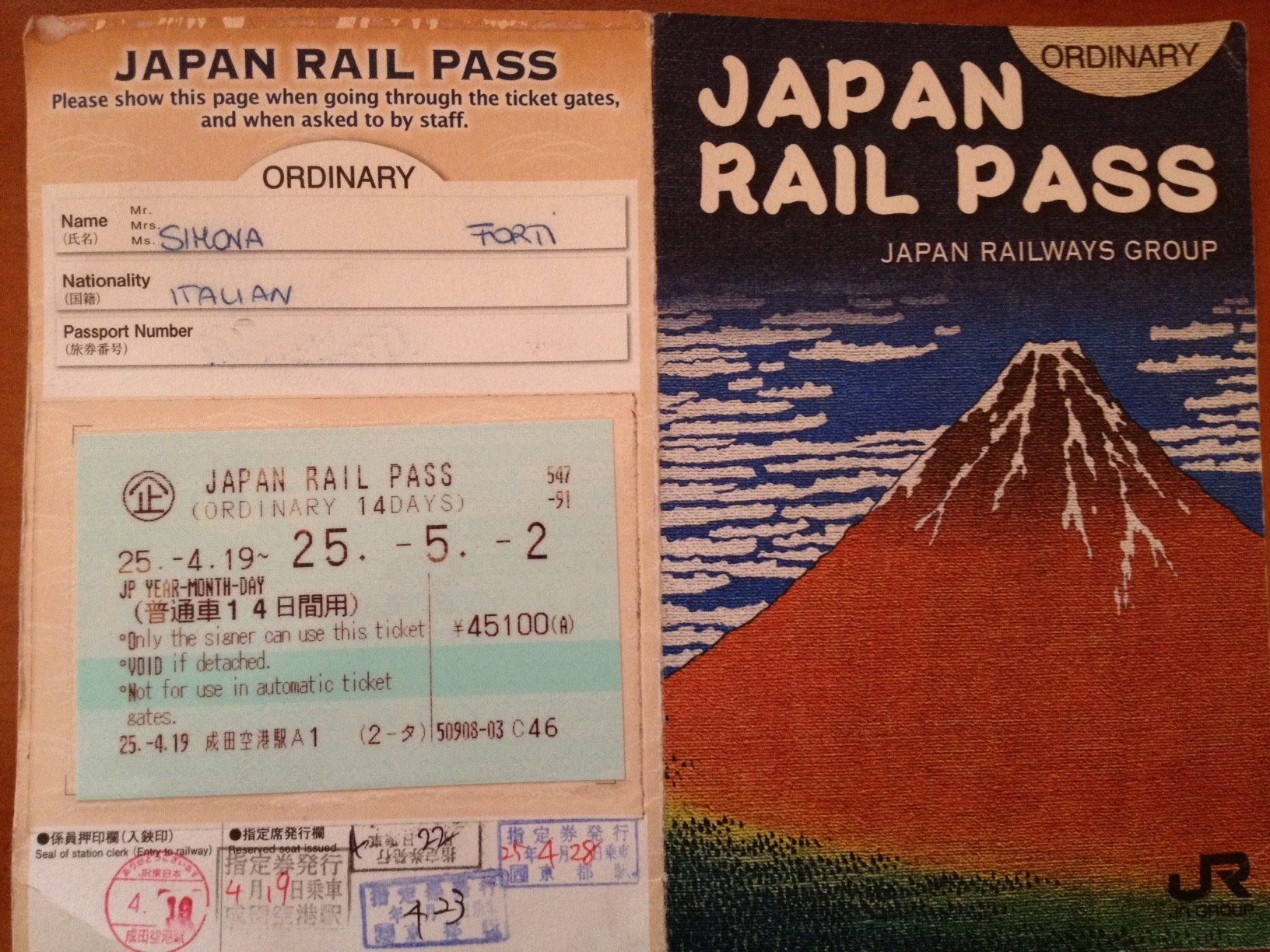 Japan Rail Pass
Where you cannot use the Japan Rail Pass, the so-called IC Cards come into play. These are rechargeable cards you can top up at station machines, allowing you to use any metro or local train, even on different operators! We got the Suica, and a single metro journey can cost from 120 to 190 yen — so from about 80 cents to just over €1.
Eating Well, here you are truly spoilt for choice. You can eat anywhere, at any hour, and anything at all. In Japan you will rarely find restaurants like in Italy that do a bit "of everything". They are very specific: you will find restaurants or little eateries that only do skewers (yakitori, for instance) or only gyoza (dumplings), those that only do sushi, others only ramen, others only tendon and so on. At the station you will find many stalls selling bento to take away, from 800 yen — just over €6 — to 1500 yen, about €12, where there is so much inside that two people can easily share one! Station bento
Japan is the country of absurd things — so you will also find restaurants or quasi fast-food places where at the entrance there are vending machines where you can choose the dishes you want to eat, pay independently and collect a ticket to hand to the waitress. Dishes are priced from 600 to 1000 yen, and for 700, for example, you will get miso soup, rice, tofu dessert and tonkatsu with egg and vegetables. You will leave absolutely stuffed :) Also, very often near the great temples you find markets and fairs full of street food stalls — from sweets to skewers to salted fish. For a few euros you can genuinely have a proper lunch.
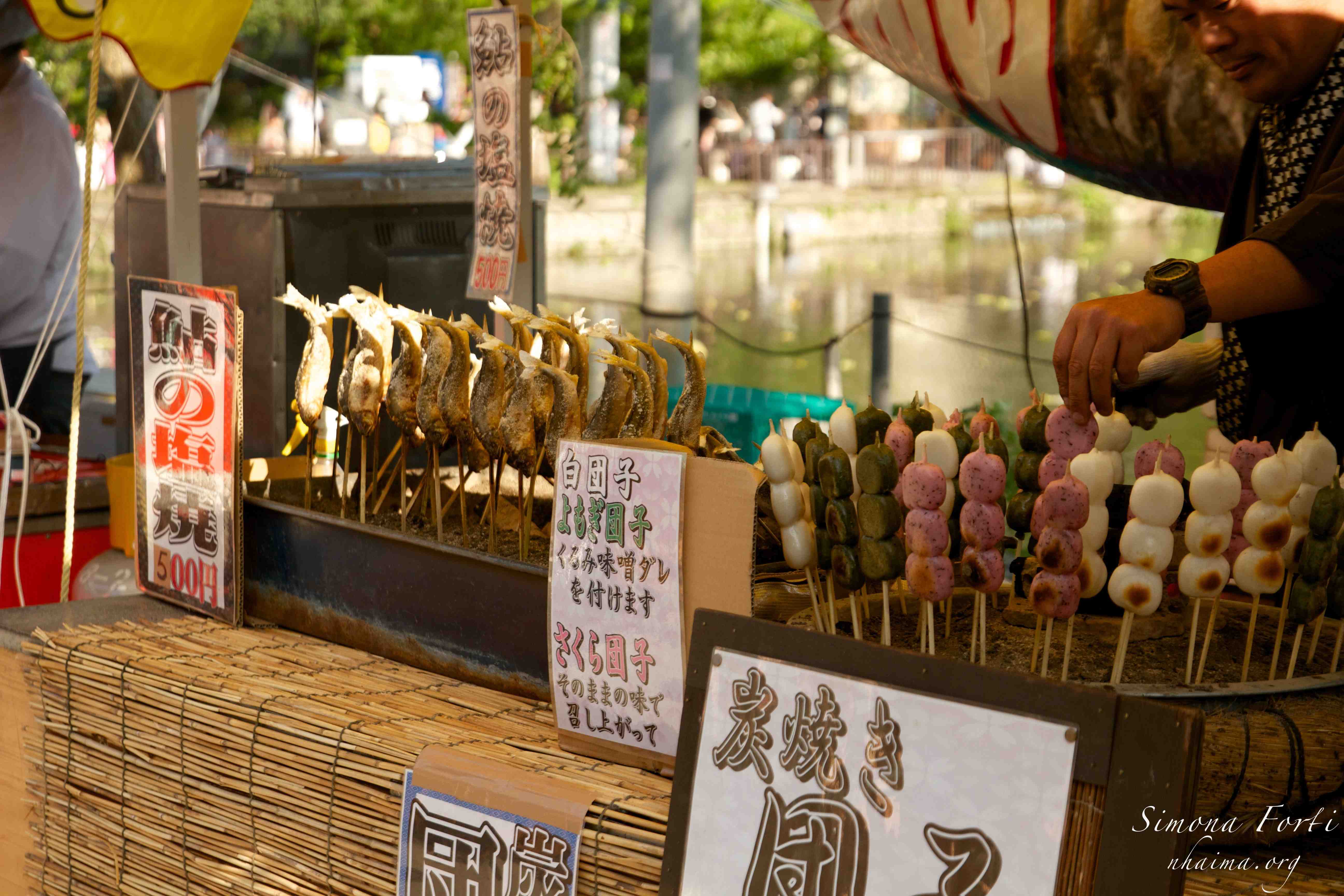 Street Food in Tokyo
Phone/Internet Calling from Japan through your own phone operator costs a great deal. What you can do is rent a mobile phone with a SIM that will allow you to call or send SMS. We, however, opted for another possibility that gave us internet access throughout the entire trip. We bought a data-only SIM that allowed us not only to share our journey on social networks but also to make calls via Skype and above all to use maps, Foursquare and other useful services. The SIMs can be purchased from b-mobile and come in two types: either with 1 GB of data or with unlimited data but at a slightly lower speed. They are prepaid SIMs, both with an initial validity of 14 days, which can however be topped up for a further 14 days. They cost around €30 and can be shipped wherever you like, including the hotel or accommodation you have chosen. They only ship within Japan.
Shopping Here I have very little to say about saving money — except to arm myself with plenty of willpower and try to resist as long as possible :D Japan is a shopping paradise; you find absolutely everything, the most absurd and most kawaii things you have ever seen in your life. But then, let's be honest, a bit of healthy shopping is entirely justified :P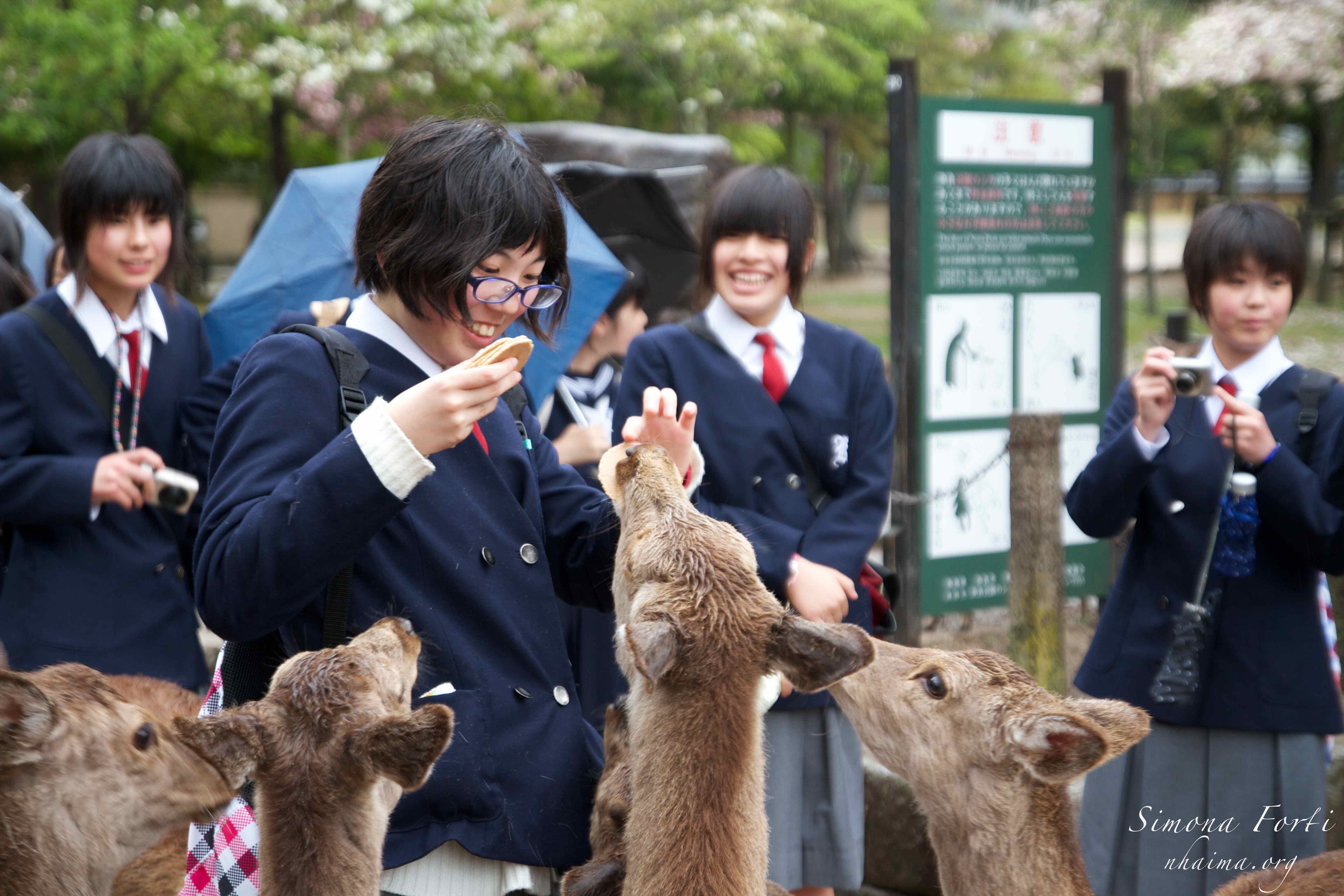 Nara
Nara