This post is from 2013. Content and links may no longer be up to date.
India: you either love it or you hate it. It knows no middle ground. It is the land of contrasts, a country that puts you to a stern test on several fronts but that also knows how to give you a great deal — everything that, for obvious reasons, our own country or culture could never provide. I loved it, and deeply so, and I suffered from the fact that on this trip I did not manage to see it as I would have wished. But in the end mine was only an au revoir and, having learned from what those 16 days taught me, I know I will go back better organised. As I was saying, India puts you to the test, starting with the heavily spiced and spicy food, with what you can see along the road as you walk through the cities — because poverty is considerable and very visible, especially in the outlying areas.
So what are the things we can do before and during our stay in India to enjoy it fully and serenely, without risking having it ruined by physical ailments or various discomforts?
Let us start with the hotel: as I had already said here before leaving, if you want a hotel that meets at least the minimum requirements of hygiene and decency, you must pay. Besides the classic Booking.com that everyone knows, what I would recommend is also having a look at Agoda.com, used predominantly for Asian destinations, where you often find hotels and deals that you would not find on other sites. If I may, spend a few extra hours of your time doing cross-checks on the hotels you have chosen. Look for reviews on TripAdvisor, Google reviews and other sites; and above all look carefully at the date of the most recent review. Do not trust those with reviews that are too old, otherwise you risk being caught out.
Hotel websites often show photos of the rooms that lead you to hope they are clean because they were taken when they were freshly polished; well, give yourself the benefit of the doubt ;) Looking at the website, the hotel where I stayed seemed to have nice clean rooms, but in reality they were small and not exactly spotless — though fortunately I have a great sense of adaptability so I managed well enough. Unless you want to opt for large hotel chains (which I normally avoid), always bring a sleeping bag or at least a camping liner to spread over the mattress; they normally have synthetic fabric bedspreads that are often stained even if, in their eyes, they are clean…
Pune - Photo by Simona Forti
Food: I had no problems whatsoever. Unlike my travelling companions who in the final days suffered from intestinal problems. What saved me were the probiotic supplements. I started taking them a week before leaving, and then one sachet every day while I was there. I took the potent kind, not mild things like enterogermina or similar; specifically I got on very well with Puraflor — but if you ask at the pharmacy, telling them you are leaving for this type of country, they will certainly be able to advise you. I brought ginger with me, which proved very useful in cases of a full stomach. Where I spent 12 days, in an ashram, lunch tended to be far more substantial than dinner. Rice and dahl were never absent, alongside vegetable curry, chapati and dessert.
In India almost everything is cooked in sauce, so forget about salad or raw vegetables. Coriander is practically everywhere, along with cloves, cardamom and cumin. And if you are dining in a restaurant, where you have ordered things you cannot even begin to imagine — because all the names are Indian and the ingredients are never listed — and you see a plate full of raw sliced onions arriving, don't panic; it means you have ordered *all* extremely spicy dishes and the onions are there to put out the fire in your mouth! I learned this the hard way. So always order plain rice as well; at worst you will have something to put in your stomach.
Lunch at the Ashram - Photo by Simona FortiGetting around the cities: if you walk, prefer closed shoes — light ones, if you don't want your feet to turn black within 10 minutes. Or open shoes that are sporty, designed to lift your foot a few centimetres off the ground. Temples are entered strictly without shoes, and temples are often open-air; many shops also ask you to leave your shoes outside, especially clothing shops. In many of these shops you find large mattresses laid on the floor where you can sit and have kurtas and punjabis in every colour and fabric shown to you.
In the city everyone gets around by taxi — small ones with a maximum of 3 seats. In reality these taxis are modified Ape Piaggio three-wheelers, with a back seat and a shell on top that closes to shelter from the sun. Prepare to have a heart attack every other minute. There are no rules in India, no highway code — everyone comes from every direction, whether cars or pedestrians; traffic lights exist but are ignored most of the time, and to make space everyone leans on the horn continuously! Pedestrian crossings are almost superfluous; people cross without hesitation even when an enormous lorry is bearing down on them. In short, everyone squeezes in everywhere, everyone rushes, yet in 16 days I never saw a single accident! I cannot fathom how this is possible, given that if the same thing happened in Italy there would be more wrecked cars than anything else.
Taxis are very cheap; a fare more or less cost us 30 rupees — not even 50 euro cents.
But do not let yourself be taken advantage of, because upon seeing foreigners they often try to charge more, even though for us it is still little. Also, the pricing is not by time as at home, but by kilometre; and very often hotels have little leaflets with all the taxi fares.
Pune - Photo by Simona Forti
As for the visual side — what you might encounter along the road — I do not have much to advise you. It is a very rich and very poor country at the same time, extremely colourful, chaotic, where the spiritual and devotional element is strong and is an integral part of daily life.
Bangles - Photo by Simona Forti
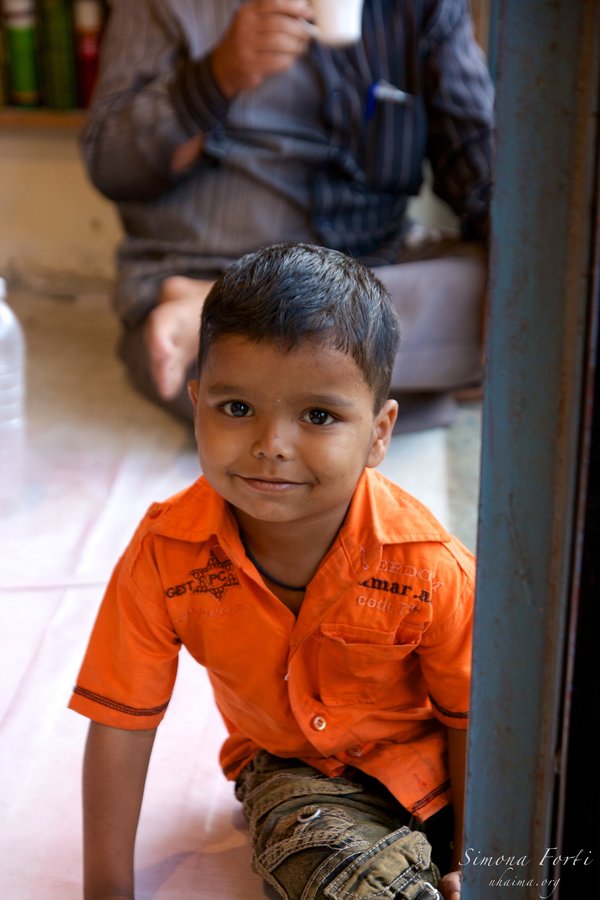
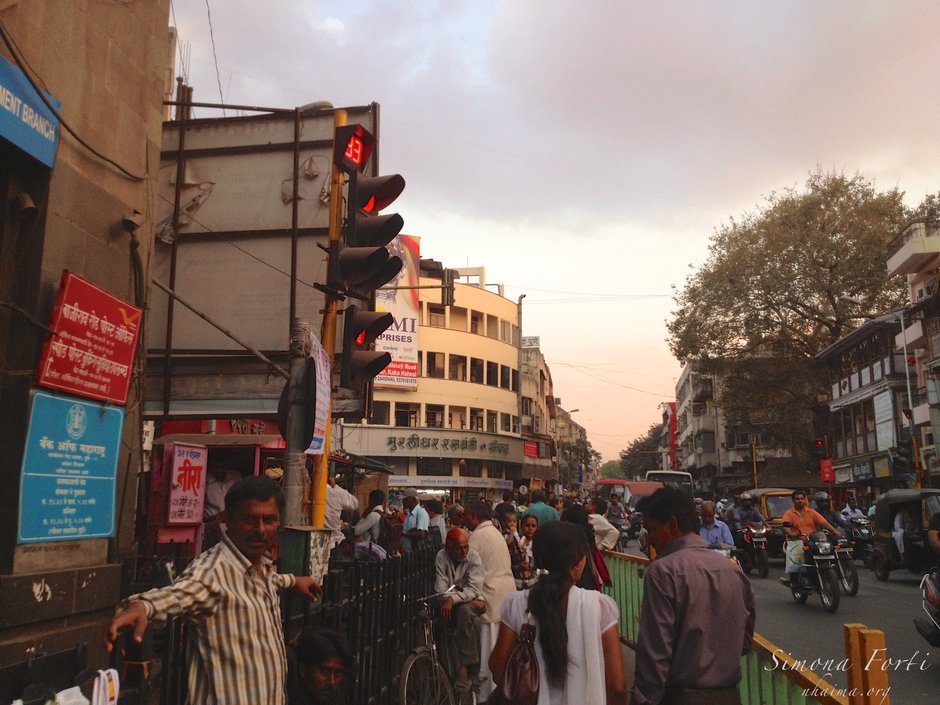 Pune - Photo by Simona Forti
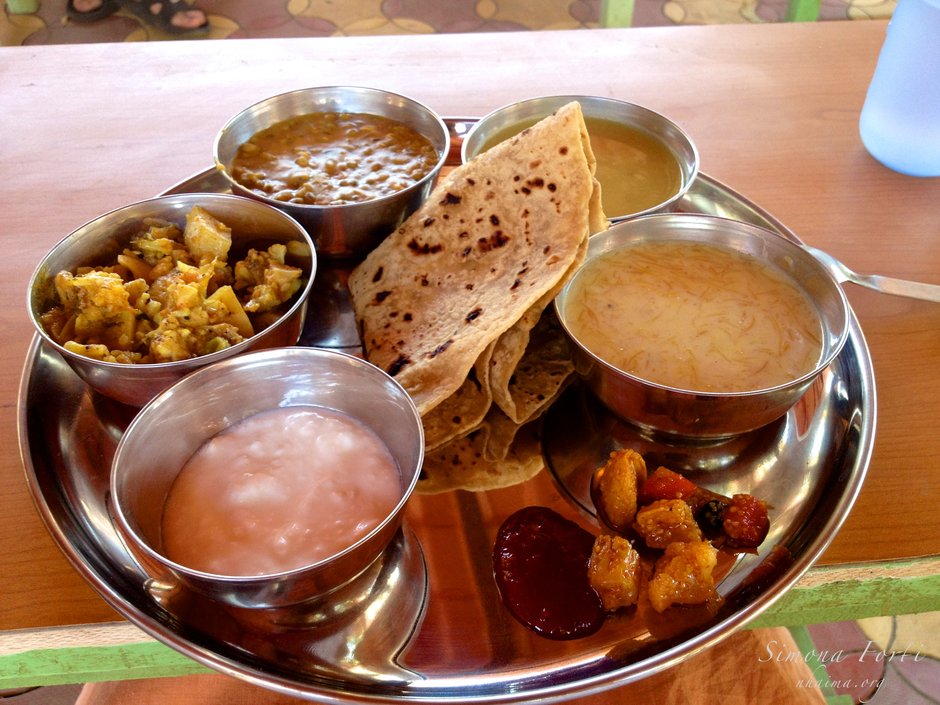 Lunch at the Ashram - Photo by Simona Forti
 Pune - Photo by Simona Forti
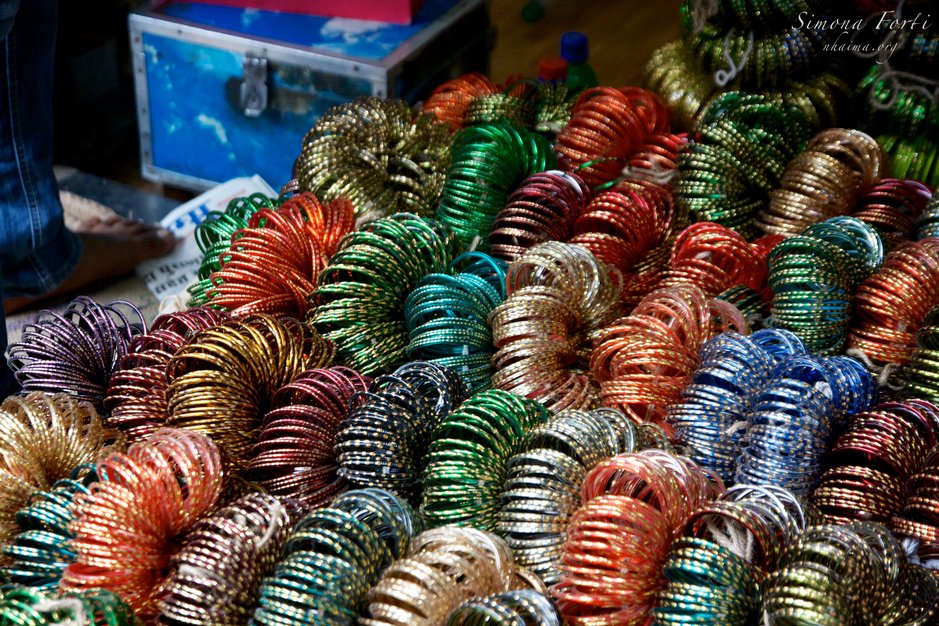 Bangles - Photo by Simona Forti
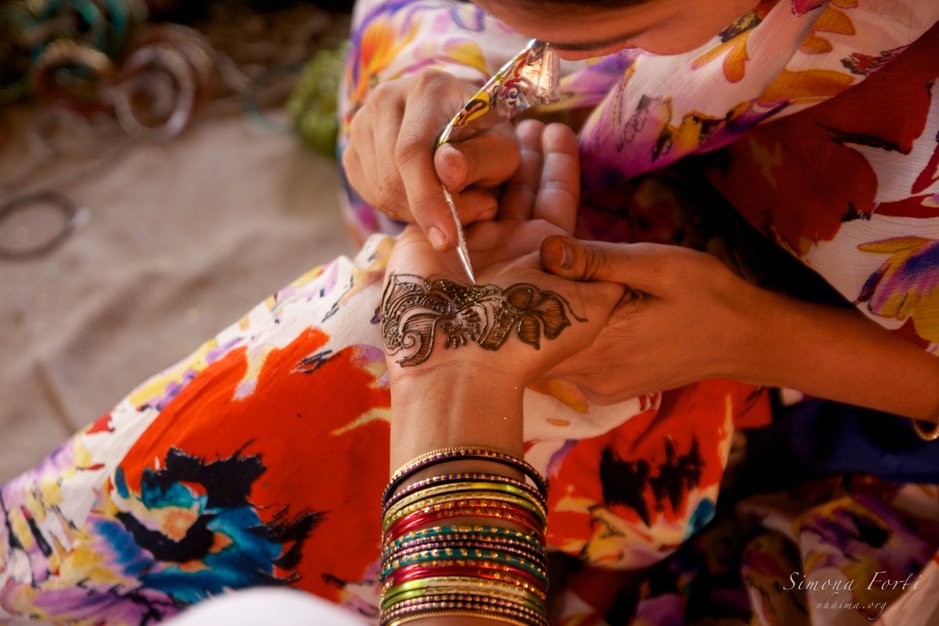 Mehndi - Photo by Simona Forti
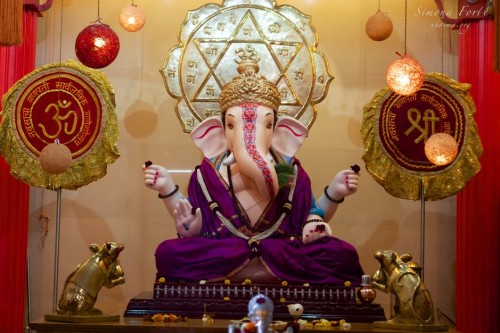
 Ganesha - Photo by Simona Forti