This post is from 2013. Content and links may no longer be up to date.
Trying to talk about Tokyo and/or recommend some places to see in a single post is practically impossible. If I were to describe it in a few words I could say it is enormous, ever-changing, colourful and unexpected. As with all of Japan, Tokyo also changes quickly; you can pass from the incredible crowds of Shibuya to the almost provincial calm of Musashino — all within 20 minutes by metro.
A street in MusashinoThe districts — or rather the prefectures — are numerous, some very different from one another, and deciding which of them to go and visit was a task at which we only partly succeeded. But despite frequently consulting the Lonely Planet during the trip — which is very well done and particularly useful — I essentially let myself be guided by "chance" and instinct. That is my way of travelling. However much I try to draw up a rough itinerary to follow, I invariably end up upending it. I love getting lost in the back streets of neighbourhoods, getting off the metro at random stops and visiting places I had never even heard of. After all, Japan is a country that lends itself beautifully to this — it has so much to offer that you would never want to go back to the hotel.
Although on the first day the metro seemed something utterly incomprehensible and unmanageable, getting around Tokyo by public transport is actually fairly straightforward. Everything is perfectly connected; you can go from one end of the city to the other without any difficulty at all.
During our days in the great metropolis we visited Akihabara: a must for those who love manga and anime, video games and all things electronic. Also known as Electric Town, Akihabara is a riot of lights, cosplay, arcades, enormous shopping centres where you can buy electronic goods, maid bars and neko bars.
Evangelion at AkihabaraYou step out of the station and feel as if you have been catapulted literally inside a video game or an anime; you wander through the back streets and sounds and lights reach you from every direction; the arcades always spread across multiple floors of an entire building — at least 6 or 7 floors; the shopping centres are almost intimidatingly large.
AkihabaraEntire floors dedicated solely to photography or mobile devices or computers; if you are looking for any electronic item you will find it here — and do pay attention to the second-hand counters, because very often there are great bargains! Also because the Japanese idea of "used" is practically the same as new.
In Akihabara you will also find "Super Potato": a marvellous retro video game and retro arcade shop. An incredible thing! If you are a serious gamer you cannot miss this place; it feels like being in a video game museum, where you find everything from individual cartridges to long-forgotten consoles.
Another stop was Kappabashi, a long street where you can find absolutely anything and everything you could possibly need for cooking and catering.
KappabashiFrom the famous Japanese knives to every conceivable plate, bowl, cup and ceramic teapot, right through to the many plastic food replicas normally displayed in restaurant windows. Sushi, udon, vegetables, sweets — you will find absolutely everything!
Those who know me are well aware of how much I love Japanese cuisine and how much I enjoy preparing it at home, so it is easy to guess that I returned home with a lovely collection of bowls, cups, chopsticks and much else besides :D
Another destination was Shibuya, the district so famous for its large — no, enormous — road crossing, continuously traversed by such a great mass of people that if you have not seen it you cannot quite imagine it. It is the fashion district, particularly adolescent fashion, where young women and men come to shop at the famous “109” shopping centres — buildings of over ten floors crammed with shops.
ShibuyaIf you are looking for something particular to buy, this is where you must come. Or rather, particular for us — for them it is perfectly normal; like the socks that simulate tattoos on the legs, or those with various embroideries, such as the marvellous cat at knee height with the face on the front and the tail on the back! And while you are there, go to dinner at "Kaikaya by the sea"; a fish restaurant that is nothing short of fantastic! One of the few where they really do speak good English; the waiters are lovely and they have a great selection of sake. Do not miss the celebrated Tuna Spare Ribs — tuna "ribs" that are absolutely finger-licking good!
We also had a good walk around Asakusa, famous for the Sensō-ji temple, where you can breathe a more traditional atmosphere. Strolling along the back streets of the main thoroughfare, stepping into the small shops selling fabrics to hang as pictures or to use as furoshiki for your bento or bags, stopping to eat in the small traditional eateries will give you a slightly different experience of Japan — where everything is much more relaxed.
A taste of tradition, you might say; where time seems to have a different shape.
AsakusaAnd finally we set off wandering here and there as chance dictated, getting off the metro at random, trying to stray from the classic tourist itineraries. And the surprises were not lacking! Like that tiny street in Shinjuku all lit up with restaurant lanterns — places so small that some hold no more than six people — where only meat skewers are served; where, with a bit of luck and a bit of initiative, we managed to spend a wonderful evening in the company of the owners and two customers, talking in a mix of Italian, English and Japanese!
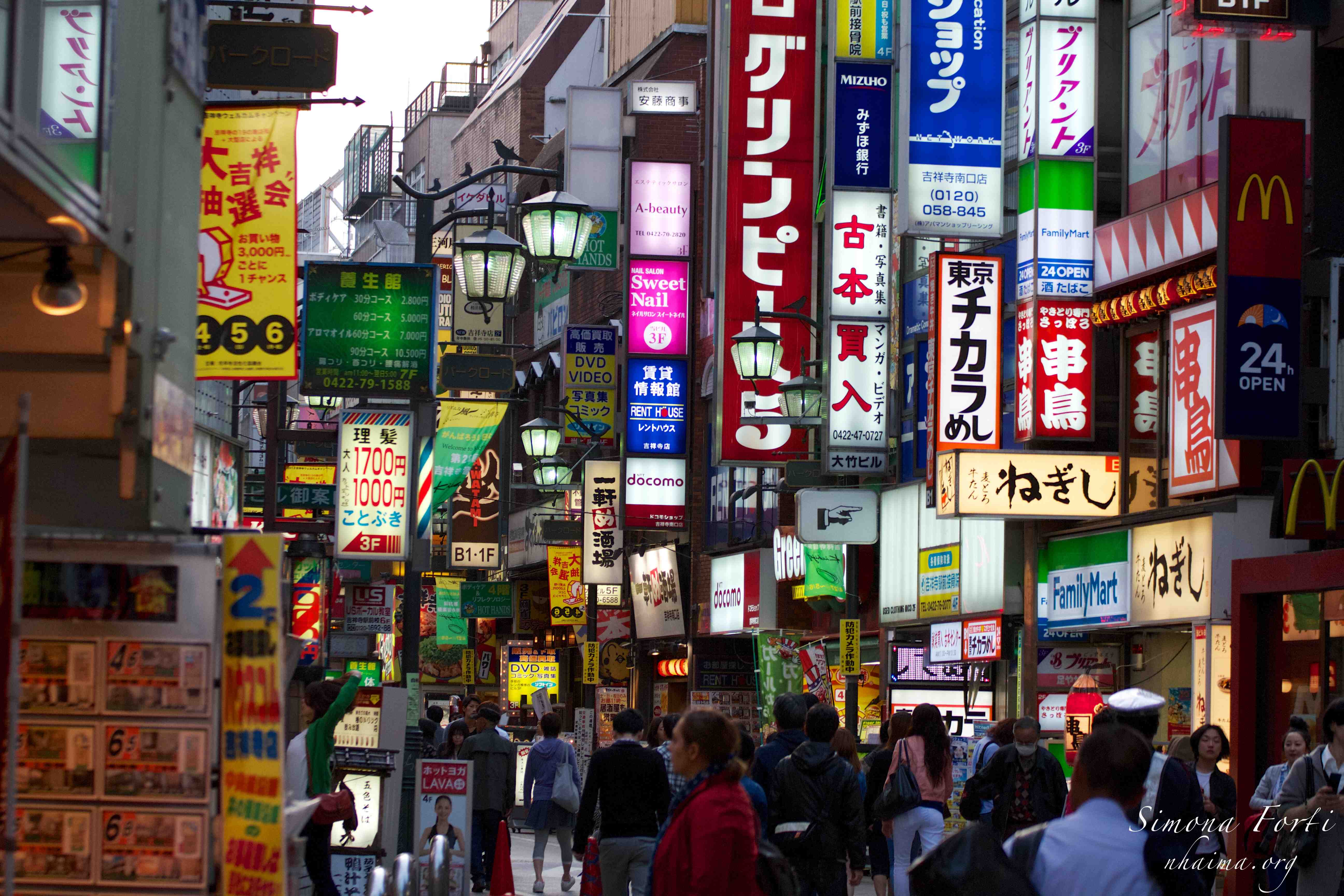
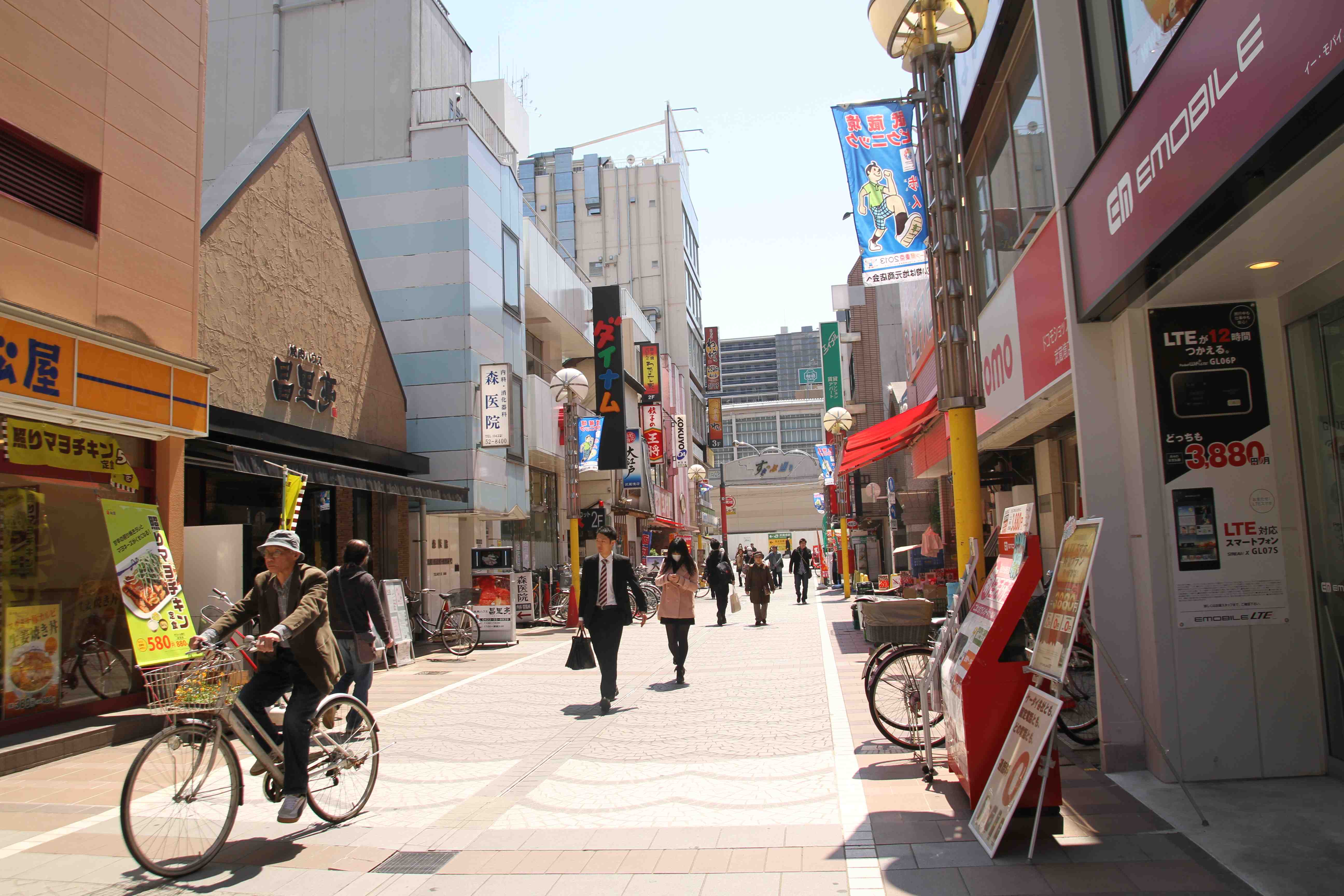 A street in Musashino
 Evangelion at Akihabara
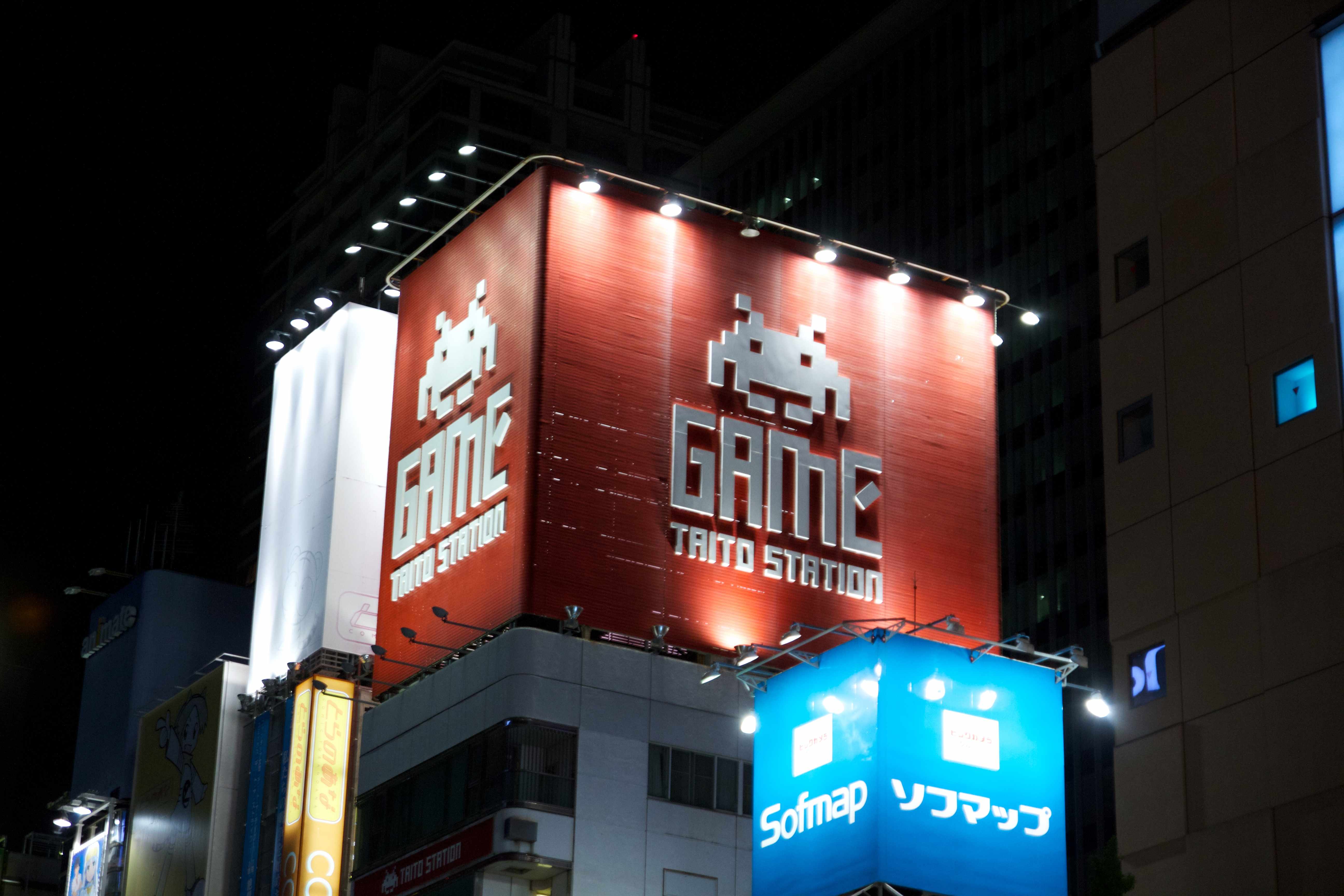 Akihabara
 Kappabashi
 Shibuya
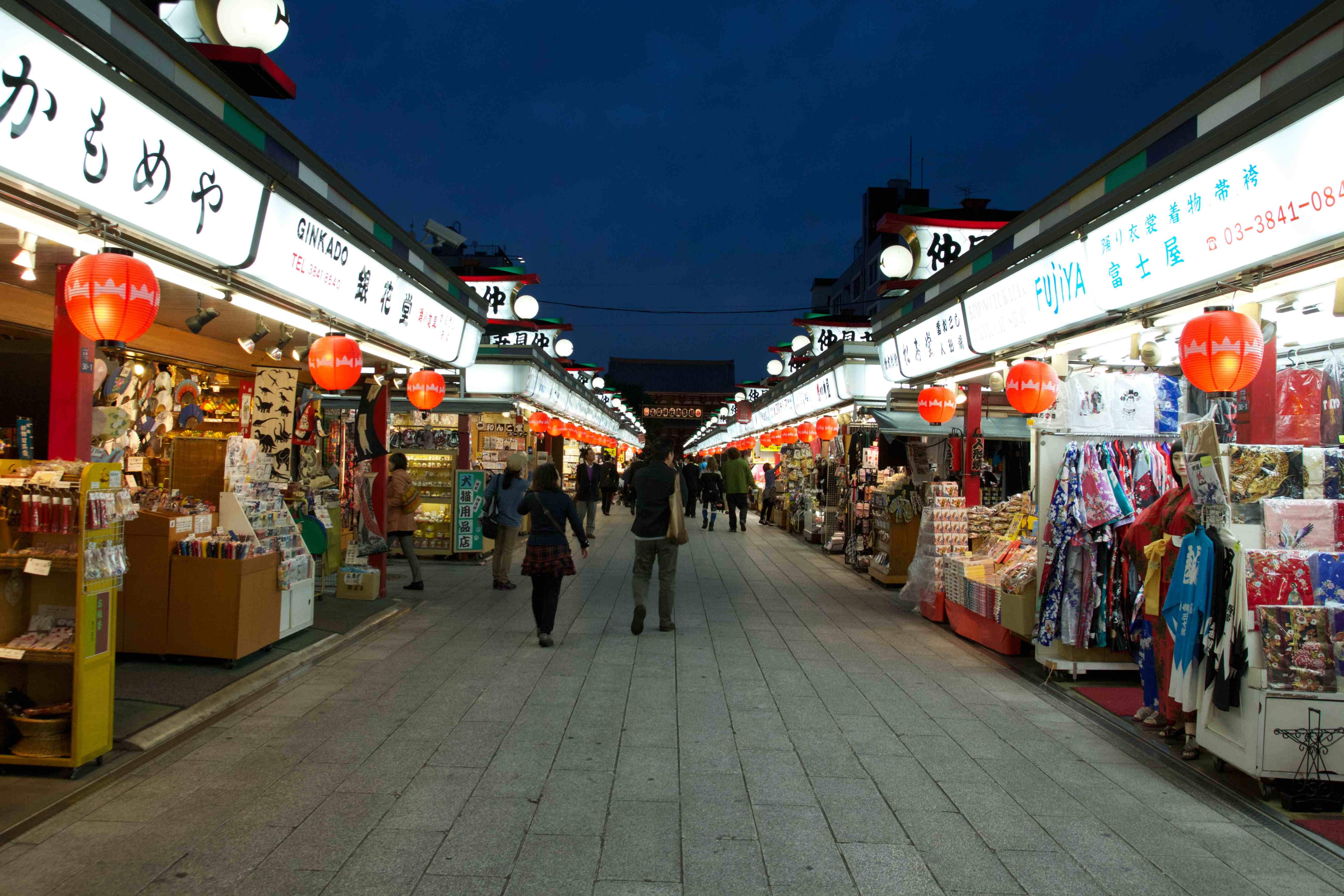 Asakusa