This post is from 2013. Content and links may no longer be up to date.
If there is one experience from my trip to Japan that has remained particularly close to my heart, it was without doubt the visit to the area of Koyasan and the overnight stay in one of the Buddhist temples.
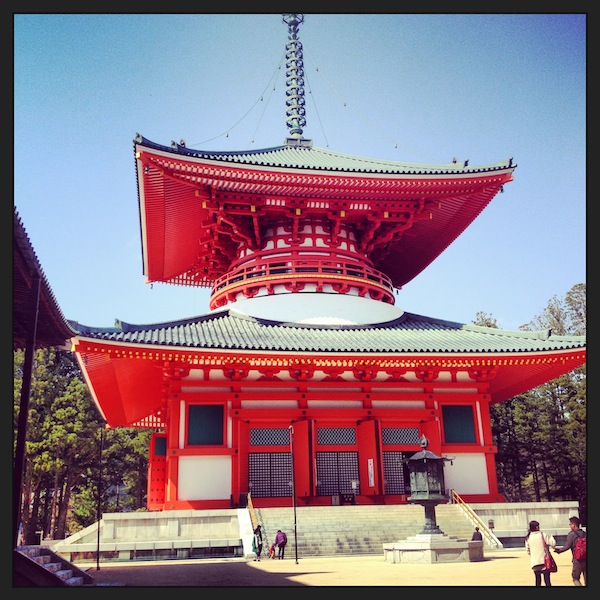
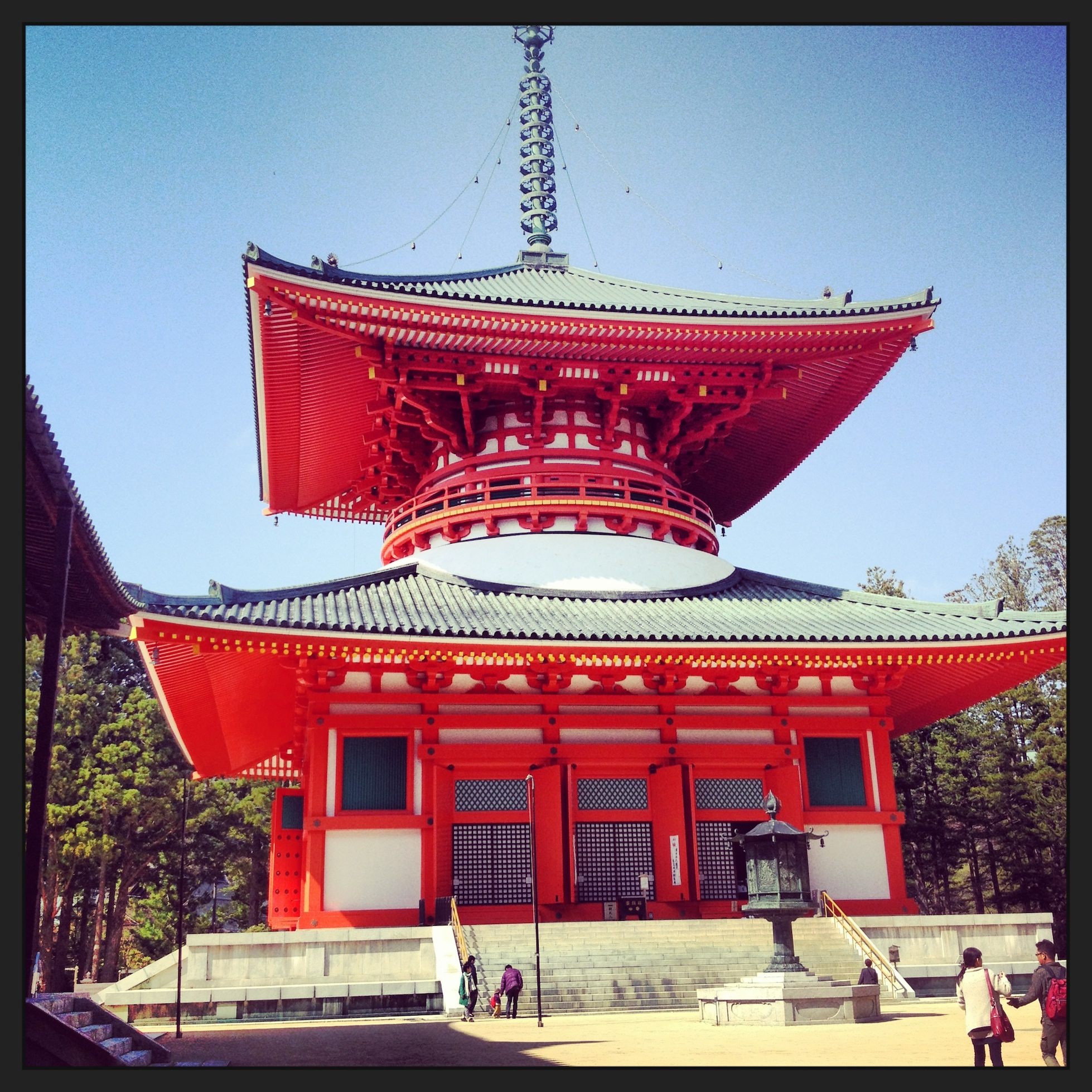
Konpon Daito Pagoda
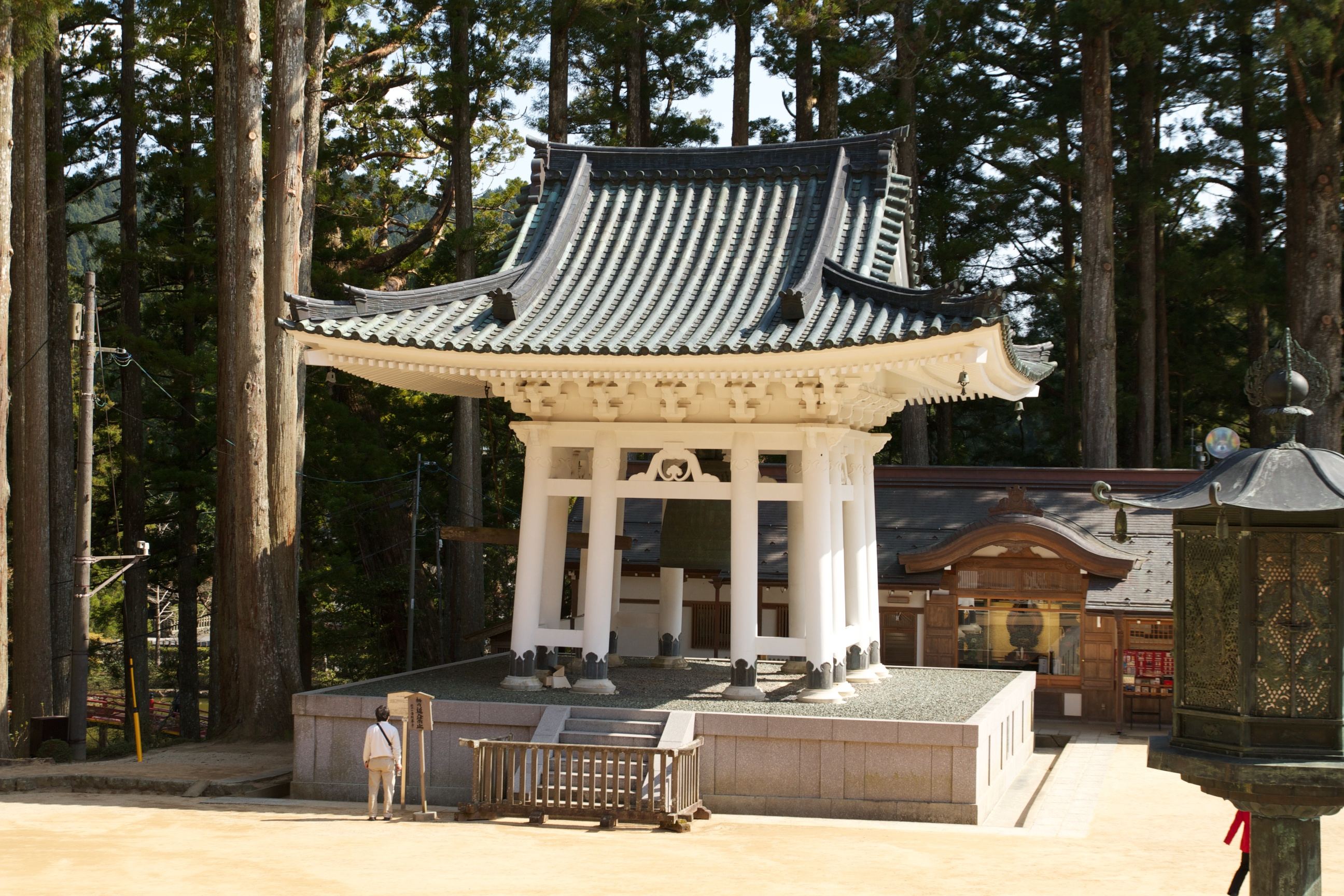
The Koyasan area takes its name from Mount Koya and is situated on the Kii Peninsula, in Wakayama Prefecture, not far from Osaka. Mount Koya, considered one of the most sacred places in Japan, was founded 12 centuries ago by the monk Kukai, also known as Kōbō-Daishi, and over time became the main centre of Shingon esoteric Buddhism, one of the largest and longest-lived schools of Japanese Buddhism. Mount Koya stands at roughly 800 metres above sea level and the entire area is rich in Buddhist temples and ancient monastic complexes, nestled in the green of nature, which offer board and lodging to travellers.
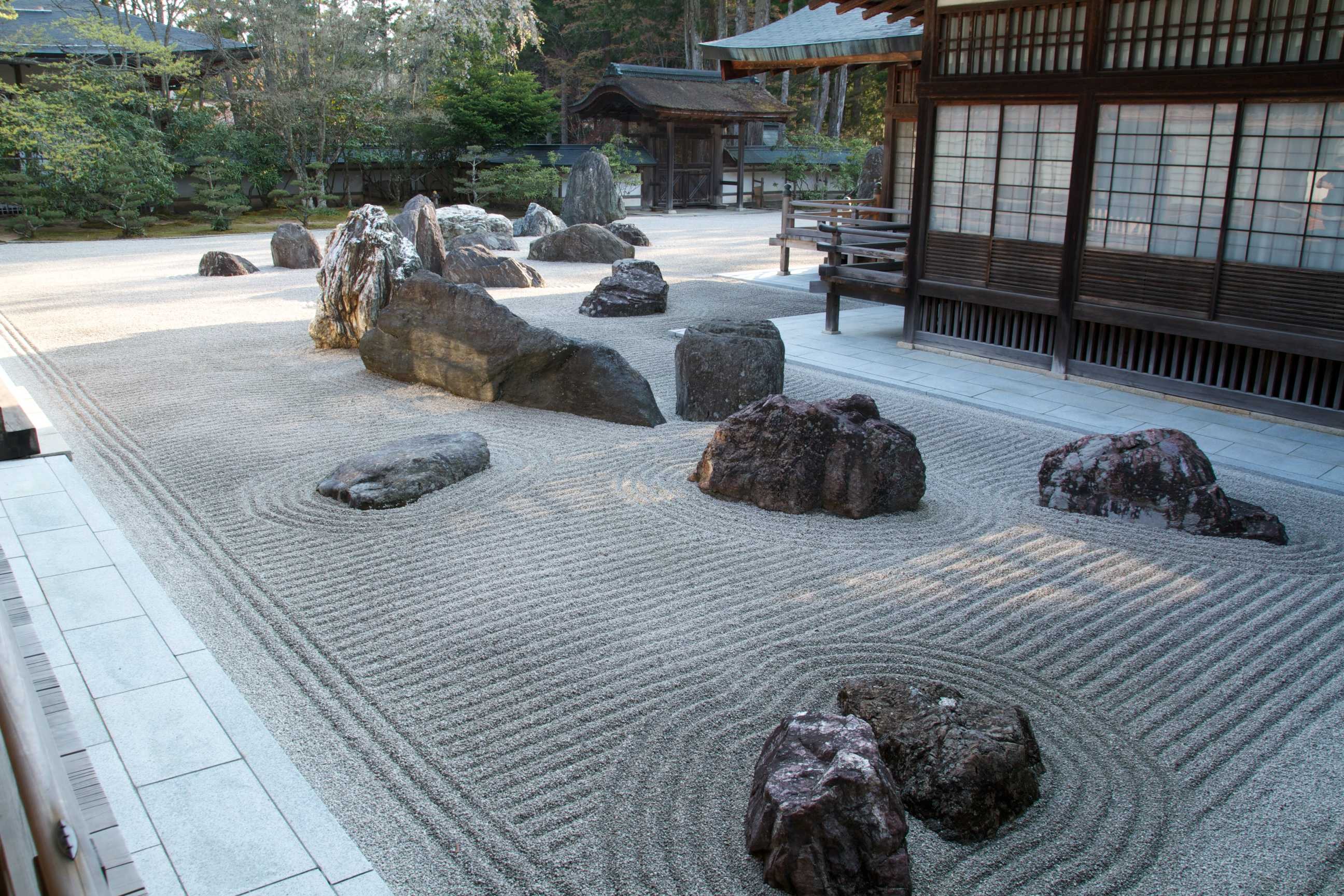
KoyasanSleeping in a Buddhist temple is an experience that, even if you are not particularly religious or "spiritual", leaves a deep and lasting mark on you. The kindness and hospitality of the temple monks is incredibly profound; the peace and silence that you experience there bring you back into harmony with the surrounding world, and their typical vegetarian cuisine, called shōjin-ryori, makes you discover new and incredible flavours. The shukubō in which we stayed — as the temples that offer accommodation to travellers are called — is named Hoon-in and is situated along the main road of the small town. The building is beautiful, simple, wooden, with inside it a true Zen garden that merely looking at it conveys calm and relaxation.
Zen Garden inside a TempleThe rooms all have tatami and futon, hot water and green tea, a small heater for the colder moments and of course a toothbrush, towel and yukata (the light cotton kimono used as a dressing gown). A young and cheerful monk, with English that was not exactly perfect but perfectly understandable, welcomed us on arrival with a wide smile; he showed us around the entire temple — the hall where morning prayers are recited at six in the morning and to which guests are invited to attend, the room where we would have dinner and breakfast, the bathrooms and toilets, and finally our room where within a few minutes he had laid out and prepared our futon. As for dinner and breakfast, unlike the ryokan where we stayed in Kyoto, each guest is served in a private room. They are all next to one another but separated by a partition so as to have privacy during meals.
Vegetarian dinner at the templeDinner was truly excellent and abundant: rice, udon in broth, tempura, pickled vegetables, things I would not know how to name or describe, tofu and sesame dessert. All accompanied by water, tea, and for those who wish, some delicious sake as well. The cost of the overnight stay is not particularly cheap: one night with dinner and breakfast came to around €80 per person, but the experience was so mystical and special that it was absolutely worth it.
At Koyasan there are many things to visit, all easily reachable and manageable even in a single day.
The great Danjo Garan complex, which houses the Kondo Hall and the great red pagoda Konpon Daito Pagoda, consists of around twenty different buildings and is one of the most sacred places in Koyasan. The Kondo Hall is a large wooden hall that has always been used as a “Lecture Hall”, or “Kodo”. From the very beginning it served as the main hall for rituals and ceremonies for the entire Koyasan community; over time, however, it was repeatedly ravaged by fire, and the current reconstruction — the seventh — dates to 1932.
The Konpon Daito, the great red pagoda, was begun by Kobo Daishi in 816 and completed in 887 by Shinzen Daitoku. It was the very first pagoda built in Japan in the “tahoutou” style and is the architectural representation of a mandala. Inside are several Buddhist figures and statues, the largest of which is the golden statue of Dainichi-Nyorai.
Walking along the road, another unmissable temple is Kongobu-ji, the main temple of Shingon Buddhism, inside which magnificent decorative panels by Kano Tanyu are still preserved. Kongobu-ji is also famous for the largest rock garden in Japan: 2,349 square metres, with 140 granite stones depicting a pair of dragons emerging from a sea of clouds, made of white sand from Kyoto, to protect the Okuden, the temple.
Oku-no-in is the most sacred place in Koyasan and the location of the Gobyo, the mausoleum of Kobo Daishi in eternal meditation since 21 March 835. It is accessed via a bridge, beyond which a 2-km stone-paved path leads to the mausoleum of Kobo Daishi. The sides of the path are lined with beautiful cedar trees and some 200,000 tombstones, monuments and other mausoleums honouring illustrious Japanese figures. The Gyobo is the centre of the tradition and faith in Kobo Daishi. Every year thousands of pilgrims travel to Koyasan to visit this sacred place and pay homage to the master Kukai.
Statue near a benchReaching Koyasan is not difficult, though it takes a while. If you are coming from Kyoto and have a Japan Rail Pass you can comfortably travel on it as far as Shin-Imamiya station. After that you will need to buy a ticket that will take you up to the summit of Mount Koya. Take the train from Kyoto (or Tokyo), get off at Osaka and change for Shin-Imamiya. From this station you have two options: either take the rapid train, which takes about 2 hours and costs 1,230 yen, or take the express, which takes an hour and a half and costs 1,990 yen. Once on the Nankai Line train, get off at Gokurakubashi station (end of the line), where a delightful cable car will be waiting to take you up to the top. There you will find staff to help you work out which bus to take depending on the temple where you are staying :)
Symbol of KoyasanAt Shin-Imamiya station you can also purchase a combined return ticket to Koyasan plus entry to several sites and a small discount on purchases in certain shops. We got this and did indeed save quite a bit.
If I can give you one last piece of advice: try to arrive at Koyasan in the morning so that you have almost the whole day to visit the various temples and mausoleums.
By about five in the afternoon everything begins to close and pilgrims and travellers retreat into the shukubō, where dinner is served around seven.
I also recommend bringing something fairly warm, because the temperature tends to drop sharply in the evening.
If you get the chance, do have this experience — you will not regret it! :)
 Konpon Daito Pagoda
 Koyasan
 Zen Garden inside a Temple
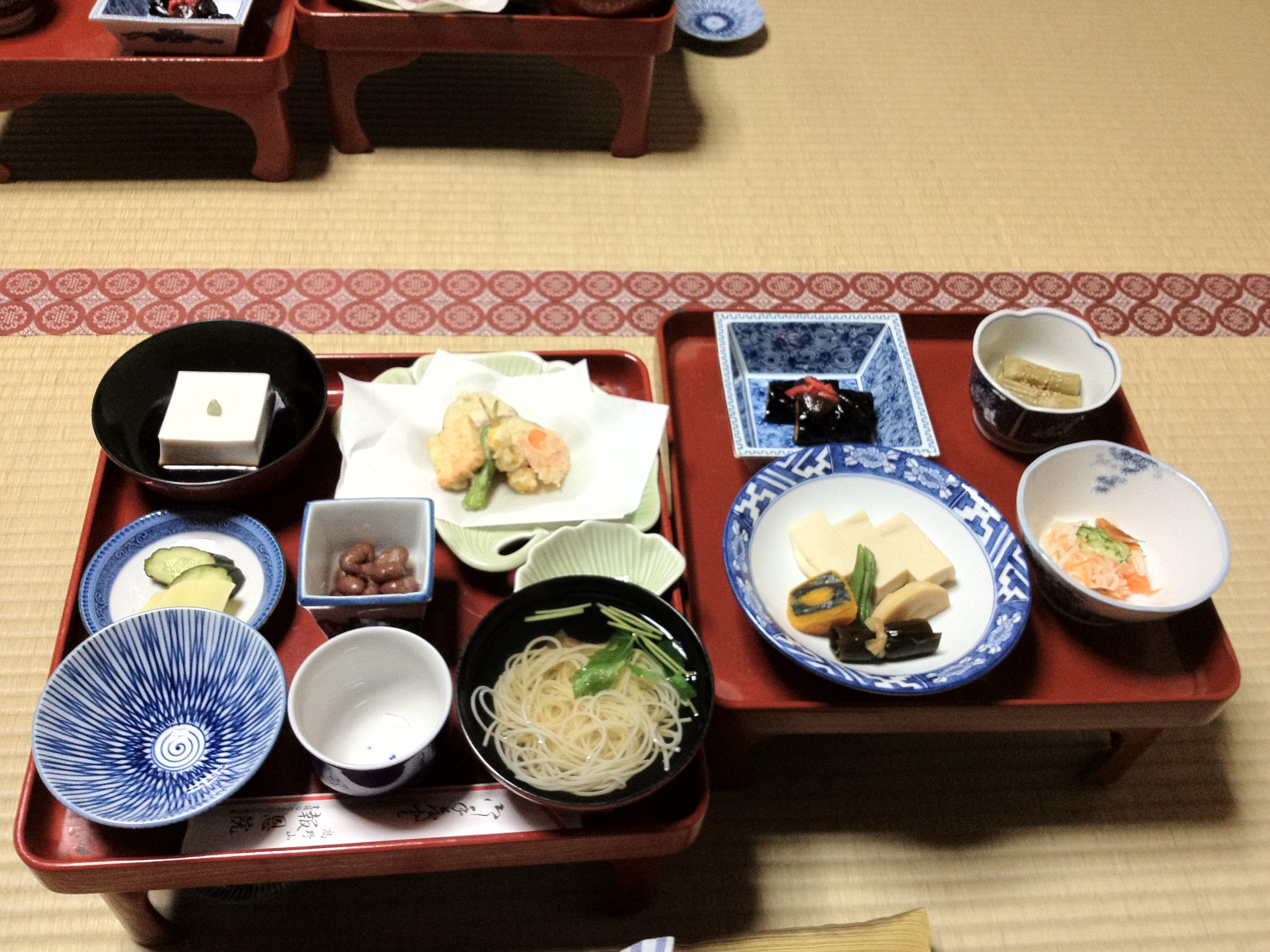 Vegetarian dinner at the temple
 Statue near a bench
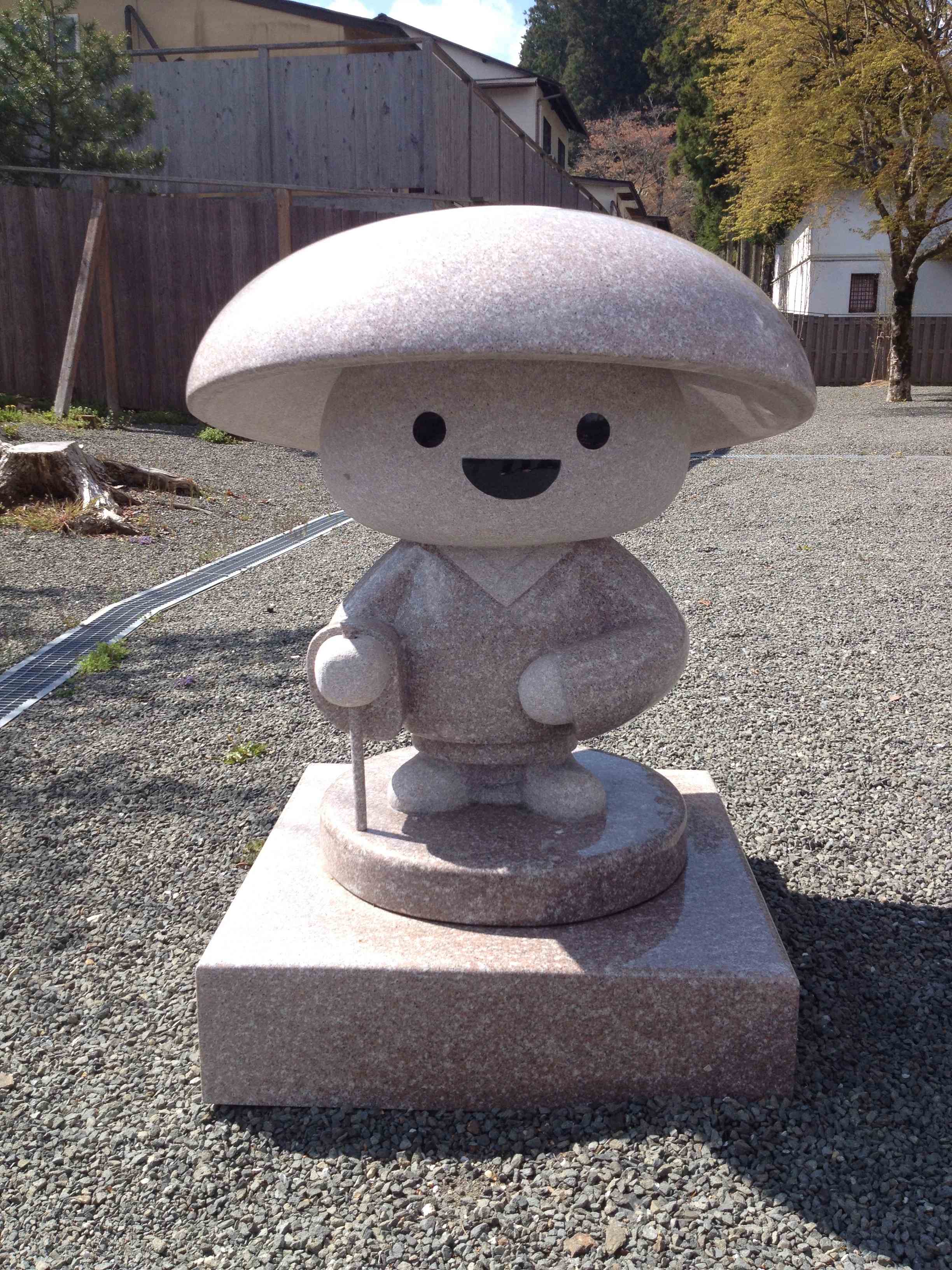 Symbol of Koyasan