This post is from 2014. Content and links may no longer be up to date.
I believe that if you go to Japan — assuming you have enough days, of course — you cannot skip this city: a symbol of tragedy but, at the same time, also of human strength and the will to be reborn.
Hiroshima is the city razed to the ground on 6 August 1945 by the first atomic bomb dropped by the United States Air Force, which destroyed roughly 98% of its buildings and killed 70,000 people, with further deaths in the months that followed from radiation. Looking at Hiroshima today, with its skyscrapers and its modernity, one cannot grasp the immensity of the tragedy it endured; but you only have to reach the Peace Park to gaze upon the Atomic Bomb Dome, or set foot inside the Hiroshima Peace Memorial Museum, and everything becomes tremendously clear.
The “attractions” — if we want to call them that — of Hiroshima are almost entirely concentrated in a single area, making them easy to visit in half a day. You begin at the Peace Park, a vast park that draws hundreds of Japanese visitors every day, mostly students, within which stand the Atomic Bomb Dome, the Hiroshima Peace Memorial Museum, and the monument dedicated to Sadako Sasaki.
The Atomic Bomb Dome — Photo by Simona FortiSadako Sasaki was a child who survived the atomic bombing but later fell ill with leukaemia and, before dying, folded by hand a great many paper cranes, because an ancient legend says that if you manage to make a thousand cranes you may be granted a wish. It is not so much the monument itself, but the tens of thousands of origami cranes kept nearby, that make the whole thing deeply moving.
The origami cranes — Photo by Simona FortiJust behind this monument, still inside the Peace Park, declared a UNESCO World Heritage Site, stands the Atomic Bomb Dome — the only building left standing after the bomb exploded. There are few words to describe it, let alone to describe the emotions its sight provokes. It sends shivers down your spine.
The Atomic Bomb Dome — Photo by Simona FortiThe Atomic Bomb Dome, also a UNESCO World Heritage Site, was the headquarters of the Hiroshima Prefectural Industrial Promotion Hall, and what remains of it is partly the dome and some partial sides of the whole structure. The Atomic Bomb Dome is practically the best-known monument in Hiroshima and is the symbol of the city's destruction, but also of the strength with which the Japanese managed to rebuild an entire city literally from its rubble. Next to the monument, in all likelihood, you will encounter a man seated in a chair with a series of photographs hanging on a line. He is a man who, incredibly, survived both the blast and the illnesses contracted from the resulting radiation. He is there, asking nothing, to bear witness — to tell people like us, completely ignorant of what really happened, the truth about those terrible days.
Detail of the A-Bomb Dome — Photo by Simona FortiThe emotionally powerful journey you undertake through Hiroshima culminates in a visit to the Hiroshima Peace Memorial Museum. It is undoubtedly the most harrowing part, where everything is recounted through images, reconstructions, and remnants of that dreadful August day. You are greeted by a photograph of a clock frozen at exactly 8:15, the moment the bomb exploded over Japanese soil, and then you move through a series of stark testimonies from the era. What struck me most? A digital day-counter showing the number of days elapsed since the first atomic bomb exploded: 24,732 — and the number of days since the last nuclear test: 70! (as of April 2013) The day counter at the Peace Museum — Photo by Simona FortiAt this point, to ease the weight of the visit somewhat, I recommend taking the ferry from the port and heading to the nearby island of Miyajima — about 5 to 10 minutes away. You know that famous image of a great red torii standing immense in the middle of the water? That is precisely what you will see as soon as you arrive on the island. Miyajima is a sacred island of Japan where it is said that both men and gods dwell, and where legend has it that one can neither be born nor die. There are many temples to visit, above all the Daishouin Temple and the Yakushinyoraizazou Temple.
Reaching Hiroshima is very easy via the Shinkansen bullet trains, which you can board using the JR Pass. It is about an hour from Kyoto and four from Tokyo. The JR Pass can also be used on the ferry to Miyajima.
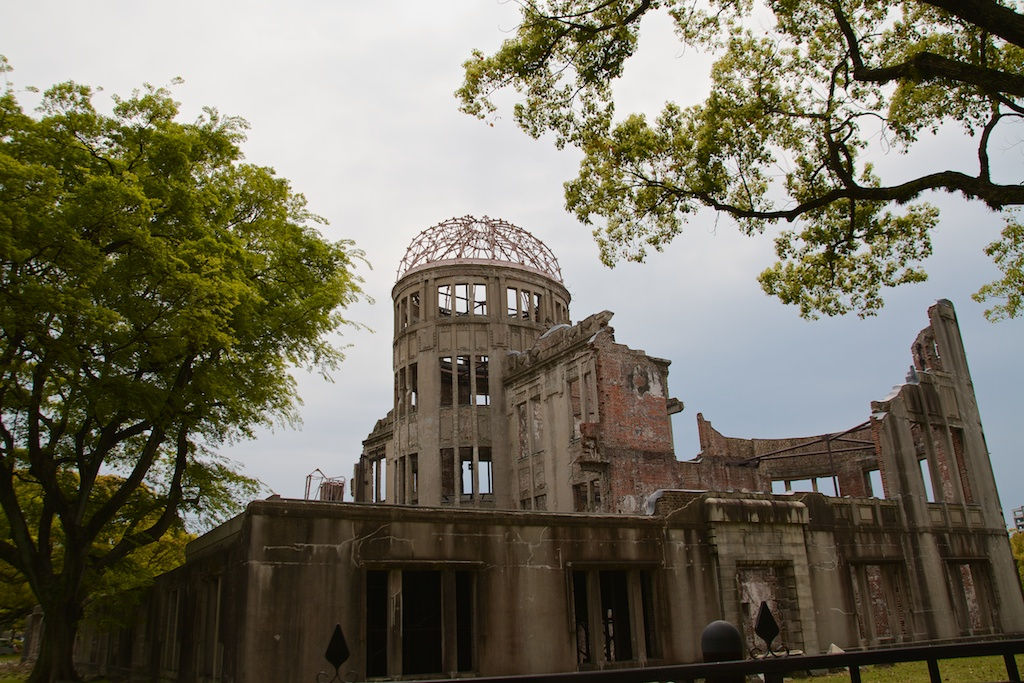
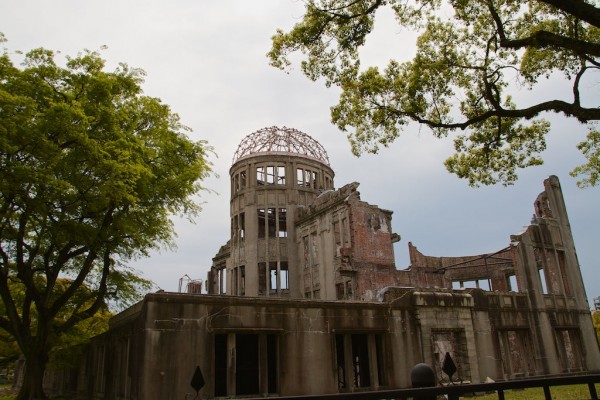 The Atomic Bomb Dome — Photo by Simona Forti
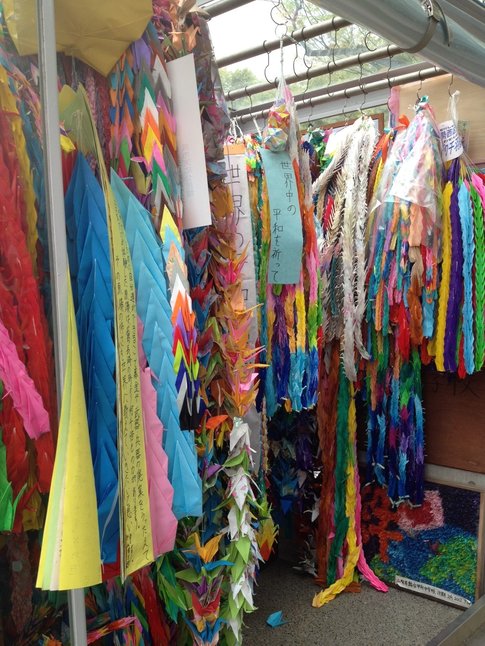 The origami cranes — Photo by Simona Forti
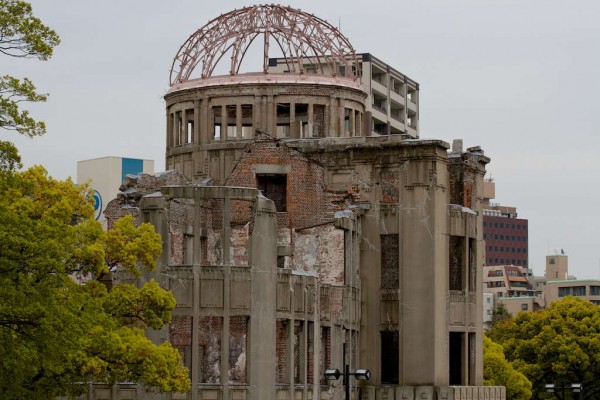 The Atomic Bomb Dome — Photo by Simona Forti
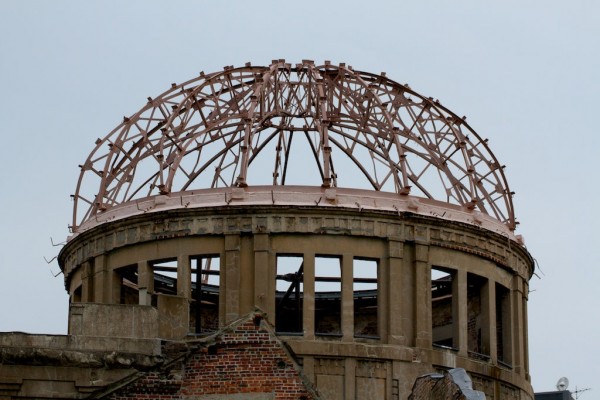 Detail of the A-Bomb Dome — Photo by Simona Forti
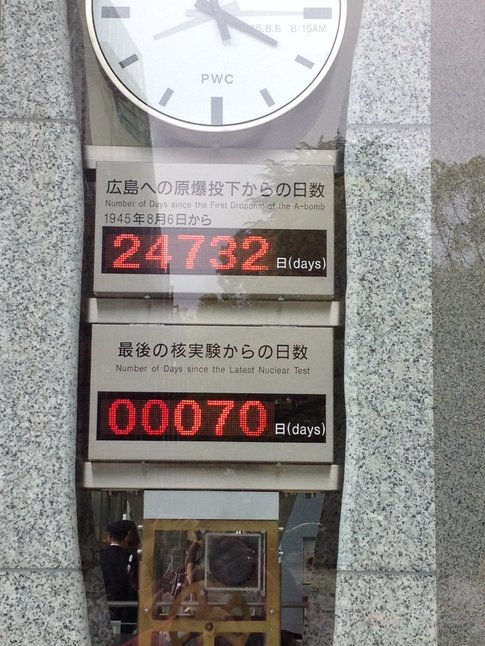 The day counter at the Peace Museum — Photo by Simona Forti